
by Daniel Sieradski
For more than a century, the Anti-Defamation League presented itself as a bridge-builder: a Jewish civil rights organization that linked the safety of Jewish communities to universal protections and coalition politics. But a mountain of evidence, including leaked internal audio, former staff testimony, federal lobbying records, court documents, district attorney investigations, and the organization’s own public statements, tell a different story: one of an institution that systematically elevated pro-Israel advocacy over civil liberties, dismissed right-wing threats to curry favor with power, weaponized the concept of antisemitism against Palestinian rights advocates and dissident Jews, and has undermined the very progressive movements it claims as allies.
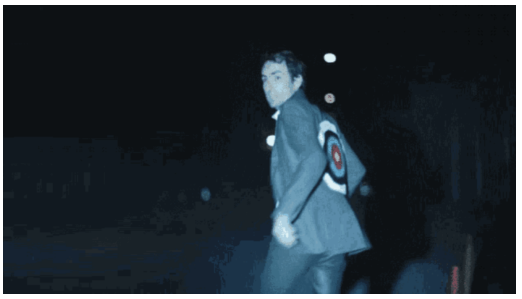
That story has now reached its most dangerous chapter. As the United States and Israel wage a war against Iran that the Brennan Center for Justice has called “flatly unconstitutional”—a war most Americans oppose, one Congress did not authorize, and one that has already produced anti-Jewish violence on American soil—the ADL has thrown its full institutional weight behind the bombing campaign. In doing so, it has completed a transformation years in the making: from an organization that once argued Jewish safety depended on the defense of everyone’s civil rights to one that has staked Jewish safety on the foreign policy of the Israeli far right and the goodwill of Donald Trump.
The ADL’s current posture did not begin with Jonathan Greenblatt’s appointment in 2015. In 1993, the San Francisco District Attorney investigated the ADL for collecting confidential information on nearly 10,000 activists and at least 700 organizations—including the United Farm Workers, the NAACP, Greenpeace, and the Center for Constitutional Rights—and for supplying that information to foreign governments, including Israel and apartheid South Africa. The ADL’s infiltrator, Roy Bullock, was a regular volunteer at the San Francisco office of the American Arab Anti-Discrimination Committee at the time its director, Alex Odeh, was murdered by a bomb planted at the office door.
This history matters because it reveals that the ADL’s current behavior is not an aberration under one CEO. It is the intensification of an institutional pattern: the use of a civil rights brand to legitimize surveillance, repression, and the policing of progressive movements—particularly those that challenge Israeli policy or build solidarity across racial lines.
What Greenblatt did was strip away the remaining pretense. In December 2015, when Trump addressed the Republican Jewish Coalition with language invoking centuries-old antisemitic stereotypes, the ADL’s response was not condemnation but cover. “We do not believe that it was Donald Trump’s intention to evoke anti-Semitic stereotypes,” Greenblatt said. Small capitulations calcify. That early accommodation set the tone for what would become the ADL’s defining posture toward right-wing antisemitism: treat it as an error of intent, never a pattern of behavior.
Soon thereafter, the ADL began to hedge on constitutional rights. A 2021 Jewish Currents investigation, based on interviews with eight former employees and federal lobbying records, revealed that in 2016, Greenblatt ordered the civil rights division to “stand down” from opposing the Anti-Semitism Awareness Act—legislation the ADL’s own lawyers had told Congress posed a First Amendment problem. One staff member put it bluntly: “With all due respect to sex workers, we’re whoring ourselves.” Federal records confirmed that after privately opposing the bill, the ADL lobbied in favor of it. When New York’s governor signed an anti-BDS executive order, the ADL’s own constitutional counsel said it “violates the First Amendment.” Greenblatt endorsed it anyway. An internal five-year strategic plan listed “Law Enforcement” and “Delegitimization” (e.g., BDS) as priority initiatives. “Civil rights” did not appear.
The ideological rupture became explicit in May 2022, when Greenblatt declared that Students for Justice in Palestine, Jewish Voice for Peace, and CAIR “epitomize the radical left, the photo inverse of the extreme right,” and announced that “anti-Zionism is antisemitism,” reversing a long-standing ADL position that took pains to stress the legitimacy of earnest opposition to Jewish nationalism. In leaked audio obtained by Jewish Currents, he told dissenting staff, “If you can’t square the fact that anti-Zionism is antisemitism, then maybe this isn’t the place for you.” In organizations like the ADL, dissent doesn’t end with a bang. It ends with a resignation letter, a quiet lateral move, a decision not to raise one’s hand. What remained after the dissenters left was an institution talking only to itself—unable to distinguish between defending Jews and defending a state.
Then came October 7, 2023. Hamas launched a devastating attack on southern Israel, killing some 1,200 people at a music festival and in kibbutzim near the Gaza border and taking roughly 250 hostages. It was the deadliest day for Jews since the Holocaust. The horror was real, the grief was justified, and the global Jewish community reeled. But here is what must be understood about what followed: October 7 did not create the Jewish establishment’s turn toward authoritarianism. It accelerated it. It gave institutional cover to a transformation that was already well underway.
Jewish communal politics had undergone a dramatic rightward shift over the prior two decades. What once counted as liberal Zionism—a commitment to peace negotiations, opposition to settlement expansion, and support for Palestinian statehood—was now treated by establishment organizations as functionally indistinguishable from anti-Zionism. Far-right Zionism had been mainstreamed to the point that establishment Jewish institutions had effectively embraced an ethnonationalist vision of Greater Israel. None of this was a grassroots evolution. It was a top-down imposition by a donor class that views Jewish survival exclusively through the lens of ethnonationalism rather than solidarity, justice, or democracy.
October 7 was the event this establishment had been waiting for—the trauma that would silence every internal critic, justify every authoritarian instinct, and transform every call for Palestinian rights into evidence of genocidal intent. The grief was genuine, and the instrumentalization instantaneous. Within days, the entire Jewish communal establishment locked into a war footing from which it has never stood down: anyone questioning Israel’s response was a Hamas sympathizer; anyone calling for a ceasefire was an antisemite; anyone noting the Israeli government’s own failures was a traitor.
Central to this lockdown was a narrative of abandonment—the claim that the progressive left had betrayed Jews in their hour of greatest need. There was a kernel of truth to it: some responses to October 7 were callous, and some Jewish progressives did feel genuinely abandoned by allies who could not bring themselves to mourn murdered civilians without immediately pivoting to geopolitical context. That pain was real. But the establishment weaponized that pain with breathtaking speed and cynicism. Figures like William Daroff—a former Republican Jewish Coalition operative who now leads the Conference of Presidents of Major American Jewish Organizations—used the moment to enforce ideological conformity and settle old scores. After Trump’s reelection, rather than seeking unity, Daroff complained that Jews had been cast as “oppressors” and blamed marginalized communities for failing to stand by Israel—as though support for the bombardment of Gaza were a prerequisite for showing up at a shiva call. Daroff and his cohort used the narrative of abandonment not to rebuild bridges but to burn the remaining ones: to justify severing ties with civil rights organizations, to attack DEI and intersectionality as inherently antisemitic, and to drive wedges between Jews and every potential ally who might have complicated the establishment’s singular focus on unconditional support for Israel.
The ADL’s decision to scale back its civil rights work was of a piece with this project—an institution literally dismantling its tools for fighting bigotry in all its forms because the broader mission had become inconvenient to the narrower one. The consensus hardened into something unprecedented in American Jewish life: a complete fusion of Jewish identity, Israeli state interests, and the suppression of dissent, enforced by institutions that claim to represent a community most of whose members never voted for them.
The ADL’s data practices turned this fusion into policy ammunition. The Intercept obtained the raw dataset behind the ADL’s post-October 7 map of “Antisemitic Incidents and Anti-Israel Rallies.” Of 1,163 entries, 54 percent were Palestine solidarity protests—not acts of hate. The ADL confirmed that a Jewish Voice for Peace sit-in at Grand Central Station, attended by roughly 4,000 people, including rabbis, was included in the antisemitism database—while Greenblatt simultaneously called JVP and IfNotNow “hate groups.”
Dump protests and pogroms into the same dataset, and you produce a chart that looks like a tsunami of Jew-hatred—a chart lawmakers cite, university administrators fear, and no one outside a handful of investigative reporters will disaggregate. Every time the ADL cried antisemitism at a peace rally, it drained the word of its power to describe the real thing. Brick by brick, the ADL built a world in which actual antisemites could hide behind the charge’s devaluation. That same month, it urged nearly 200 university presidents to “immediately investigate” SJP chapters for potential terrorism violations carrying up to 20 years in prison—citing Instagram stories as evidence. Asked for a factual basis, an ADL spokesperson replied, “Our letter speaks for itself.”
The arithmetic of the ADL’s priorities has never been more legible. When Trump held a 2024 rally at Madison Square Garden featuring racist and antisemitic speeches, the ADL issued a statement that did not name Trump, did not name the Republican Party, and did not quote any of the offensive language. In the days following reports that Trump’s generals described him as “a fascist to the core” who spoke admiringly of Hitler, Greenblatt issued eight Twitter posts condemning undergraduate campus organizations. Zero about Hitler. Even former ADL director Abe Foxman publicly rebuked his successor: “He went after this guy on CNN yesterday and couldn’t mention Trump. It’s a little bizarre.” Foxman had condemned Trump’s MSG rally in Holocaust terms: “The gas chambers in Auschwitz did not begin with bricks; they began with words.” The ADL said nothing comparable.
When Elon Musk performed what was clearly a Nazi salute at a Trump inauguration celebration, the ADL told the public to “take a breath”—while through its partner JLens, it had started an ETF accepting investments in Tesla, Meta, and Amazon in a purported bid to exert influence over these companies’ speech policies. A man who amplified the Great Replacement Theory—the same ideology that motivated the Tree of Life shooter—received the charitable interpretation no college student carrying a Palestinian flag would ever receive.
Perhaps the most revealing moment came in January 2025, when Greenblatt addressed the Israeli Knesset and invoked Israel’s covert pager-bomb campaign against Hezbollah—a mass casualty operation that killed dozens and wounded thousands of Lebanese civilians—as a model for fighting antisemitism online. “We need the kind of genius that manufactured Apollo Gold Pagers and infiltrated Hezbollah for over a decade to prepare for this battle,” he said. He was no longer pretending the ADL was a civil rights organization. He was asking to be understood as a combatant.
The structural gutting followed: The ADL’s flagship civil rights program, No Place for Hate, shuttered; 22 employees were laid off in June 2025 with cuts explicitly framed as a retreat from civil rights work; and in October 2025, the “Protect Civil Rights” section was removed from the ADL’s website entirely. The deleted passage had read, “Our founders established ADL with the clear understanding that the fight against any one form of prejudice or hate cannot succeed without countering hate of all forms.” An ADL spokesperson described the removal as “deferred maintenance”—as though the founding principle of an institution were a leaky faucet someone had been meaning to get around to.
Then, on February 28, 2026, the United States and Israel launched joint strikes against Iran. This included an attack on a girls’ school in southern Iran, which killed more than 175 people. The Brennan Center called the strikes “flatly unconstitutional.” Every major Jewish establishment group, save the Jewish Council on Public Affairs, issued statements of support. Just 21 percent of Americans favor the war. On a conference call, Greenblatt declared, “What we know beyond a shadow of a doubt is that the demise of the Islamic Republic makes this a safer world.” By Tuesday, the ADL was posting that slain Iranian Supreme Leader Khamenei was a modern-day Haman. Solidarity with dead schoolgirls on Monday, Purim memes on Tuesday.
When pressed on the perception that Israel had driven the decision, Greenblatt deployed the ADL’s perfected closed loop: anyone focusing on Israel’s role was simply revealing their antisemitism. Here lies the deepest irony: blaming Israel is often antisemitic—it enacts the ancient trope of the scheming Jew pulling strings behind the curtain of gentile power. But the ADL has no standing to make that argument. It has spent years insisting that American Jewish interests and Israeli state interests are identical, that criticism of one was hatred of the other. You cannot fuse a community’s identity to a state’s foreign policy and then cry foul when people blame that community for the state’s wars. The ADL built the conflation. The antisemites merely accepted it.
Tucker Carlson, for instance, explicitly stated that the conflict “happened because Israel wanted it to happen. This is Israel’s war. This is not the United States’ war.” Marjorie Taylor Greene echoed this sentiment, arguing, “Make America Great Again was supposed to be America first, not Israel first, not any foreign country first,” and implying that U.S. involvement was driven by Israel’s agenda. Even as Mike Johnson and Marco Rubio justified U.S. participation as a defensive measure, they underscored Israel’s determination to act “with or without American support,” portraying Israel as the primary instigator whose actions necessitated a U.S. response. A new poll by Zeteo found that 46% of Americans believe Donald Trump is more responsive to Israel than to the American people, with that number rising to 50% among independents. This significant public sentiment reinforces the dynamic where American Jews, deliberately conflated with the Israeli state by the ADL, are positioned as an influential group whose perceived loyalty lies elsewhere.
The consequences arrived almost immediately. On March 8, two Israeli-American men were hospitalized in San Jose after being attacked outside a restaurant while speaking Hebrew. Their assailants shouted, “Don’t mess with Iran” and “Fuck the Jews.” Nobody intervened. (Update: Shortly after this article’s publication, an active shooter event was reported at a Detroit-area synagogue.)
Meanwhile, the Military Religious Freedom Foundation received over 100 complaints from service members reporting that commanders had described the Iran war as part of God’s plan for Armageddon. This is the coalition the ADL has chosen: Christian nationalists who love Israel because they believe it will trigger the apocalypse, at which point Jews who don’t convert will be damned. These are the allies it embraces while calling Jewish Voice for Peace a hate group.
The ADL now faces bipartisan delegitimization: sixty Muslim, Arab, and allied organizations have called for Greenblatt’s firing; New York Times columnist Bret Stephens—with Greenblatt in the audience—said he would “dismantle” the ADL; and board member Stephen Ludwig resigned, quoting Greenblatt’s own book on authoritarianism back at him: “Not only could it happen here, Jonathan, it is happening here. Read your damn book.”
The men beaten unconscious in San Jose did nothing wrong. They were not agents of the Israeli government. They were waiting for a table at a restaurant. But the institutions that claim to speak for them had spent years ensuring that in the American imagination, there would be no daylight between ordinary Jewish life and the bombs falling on Tehran. The ADL had burned every bridge to every community that might have stood with them and called the arson “advocacy.”
The ADL did not fall. It chose, step by step, concession by concession, silence by silence, to become what it is: a lobby that speaks the language of victimhood while serving the interests of power. The record is not ambiguous. The pattern is not accidental. And the cost is measured in the safety of the people the ADL was founded to protect—people who are now, thanks to the institution that claims to speak for them, more exposed and more alone than at any point since the Shoah.
____
https://jewschool.com/the-adl-has-put-a-target-on-all-of-our-backs-174693