
Trump Warns Tehran To “Fully Open” Hormuz Or Face ‘Obliteration’ As Iran-Israel Trade Nuke-Plant Strikes
ZeroHedge.com
Summary
- Trump threatens to “obliterate” Iran’s power-plants if Hormuz is not open and safe within 48 hours
- Natanz nuclear site attacked: Iran says “no nuclear radiation” detected, even as attacks on core sites like Isfahan nuclear facilities signal clear escalation despite earlier Trump signals of maybe “winding down.”
- Iran has responded by targeting Israel’s Dimona nuclear facility. The Israeli army confirmed “a direct impact of an Iranian missile” on a building in the city that houses a nuclear research facility, AFP reported.
- War expands with furthest ever Iranian missile launch: Iran fires missiles at Diego Garcia in a failed but unprecedented long-range strike.
- US claims”degraded” Iran’s threat to traffic through Hormuz: CENTCOM says Iran has lost “significant combat capability” after 8,000+ strikes, and bunker-busting attacks on coastal facilities tied to control of the Strait of Hormuz.
- 23 ‘allies’ sign statement of support for Hormuz traffic safety, signaling their readiness to support secure transit through the Strait,
- Kharg invasion risk rising: US still weighing a high-risk seizure of Kharg Island as more US warships and Marines surge to the region, raising odds of boots-on-the-ground escalation.
Trump Threatens to “Obliterate” Iran’s Power Plants If They Don’t “Fully Open” Hormuz
After declaring victory “we won” on Friday, President just went 0 to ’11’ on the rhetoric scale.
In a post on his TruthSocial feed, Trump declared:
“If Iran doesn’t FULLY OPEN, WITHOUT THREAT, the Strait of Hormuz, within 48 HOURS from this exact point in time, the United States of America will hit and obliterate their various POWER PLANTS, STARTING WITH THE BIGGEST ONE FIRST!”
Seems pretty clear what the goal is here… and the clock is ticking.
Iran Says It Is Targeting Israel’s Dimona Nuclear Facility In Response To Natanz Strike
At least 39 people were injured in Dimona, home to a nuclear facility in southern Israel, following a barrage of missiles launched from Iran, Israeli media reported on Saturday. The attack marks the seventh missile strike on Dimona and its surroundings since midnight local time (2200GMT), Israel’s Channel 12 reported. Israeli ambulance services provided medical treatment and evacuated the wounded to a hospital, the outlet added.
The Israeli army confirmed “a direct impact of an Iranian missile” on a building in the city that houses a nuclear research facility, AFP reported.
Dimona sits near one of the most sensitive locations in Israel: the Shimon Peres Negev Nuclear Research Center, long linked to Israel’s undeclared nuclear weapons program.
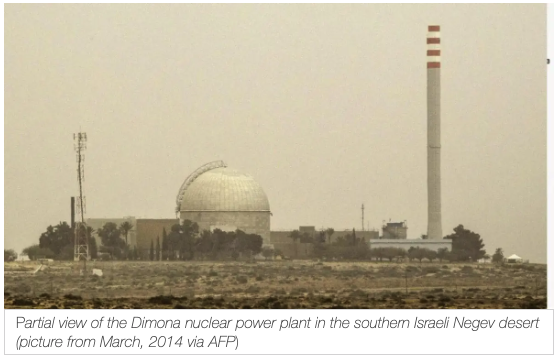
The International Atomic Energy Agency says it is aware of reports of a strike in Dimona but has received no information of damage to the Negev nuclear research centre from Israel
Iran says it was targeting Dimona, which houses Israel’s main nuclear research center, as a “response” to an earlier strike on the Natanz nuclear enrichment site. The strike on Dimona came hours after a US-Israeli attack targeted Iran’s Natanz nuclear enrichment complex. Iran condemned the strike as “criminal attacks”, saying it violated international law and nuclear agreements, including the Non-Proliferation Treaty (NPT), and warned of wider consequences.
The International Atomic Energy Agency confirmed the Natanz attack but reported no rise in radiation levels outside the facility, as it launched an investigation and urged restraint. Iran had previously warned it could target Dimona if Israel continued striking nuclear sites.
A military source told Tasnim News Agency on Saturday that Iran has shifted its strategy, signalling a move beyond a policy of proportional retaliation. The source said Tehran now intends to raise the cost of any attack, warning that future responses will be broader and more damaging.
“The enemy must have realized by now that if they attack one infrastructure, we will attack several of their infrastructures; if they attack a refinery or gas facility, we will attack several similar facilities and teach them a crushing lesson.” The source added: “Iran responds to every mistake of the enemy with surprise and sets their interests on fire.”
* * * Take this, it’s dangerous to go alone (three left)
Natanz Nuclear Site Suffers Direct Attack – No Radiation Leakage
President Trump’s late in the day Friday comments proclaiming “I think we’ve won” suggested he might be readying the announcement of an offramp or at least de-escalation, but that speculation has proven premature as things definitely escalated overnight.
For apparently the second time of Operation Epic Fury, Iran’s flagship enrichment site at Natanz nuclear facility has come under attack. Iran’s nuclear agency confirmed the strike but is keeping details deliberately vague, saying nothing about how it was carried out or what weapons were used. What it did emphasize, however, is that “no nuclear radiation” was released.
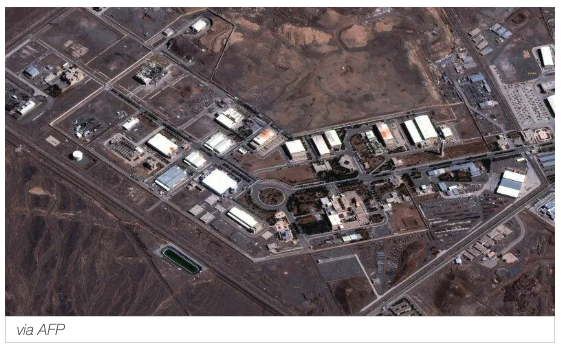
Natanz – alongside the Isfahan nuclear facilities – sits at the core of Tehran’s nuclear program, long viewed as a prime target in the US-Israel campaign to cripple Iran’s ability to produce an atomic bomb – though it remains that even Iran’s current wartime leadership is saying it has no intent to produce a nuclear weapon. The AP says Natanz was earlier struck at least once at the opening of the conflict, writing: “The facility, Iran’s main uranium enrichment site, was hit in the first week of the war and several buildings appeared damaged, according to satellite images.”
All of this, along with steady the overnight and early morning heavy bombing of Tehran marks a definite escalation despite Trump having floated the idea of “winding down” operations in the late Friday comments.
Iran Vastly Expands Threat Radius: Diego Garcia
Another huge escalation and development: British officials are staying tight-lipped after an attempted Iranian strike on the key Indian Ocean air base on Friday reportedly failed, offering no details on what exactly happened. But this risks pulling in the UK, which has appeared reluctant to directly participate in Trump’s operation. Britain has generally condemned “Iran’s reckless attacks.”
Just hours after Iran targeted the Diego Garcia base, Britain confirmed US bombers can continue using UK facilities – including the same base – for operations aimed at stopping Iranian attacks on shipping in Hormuz.
“Iran fired two intermediate-range ballistic missiles at Diego Garcia, a joint U.S.-U.K. military base in the middle of the Indian Ocean, according to multiple U.S. officials,” The Wall Street Journal details. “Neither of the missiles hit the base, but the move marked Iran’s first operational use of IRBMs and a significant attempt to reach far beyond the Middle East and threaten US-UK interests.”
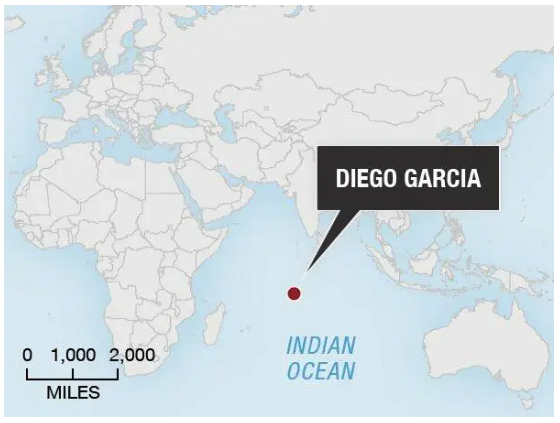
“One of the missiles failed in flight, and a U.S. warship fired an SM-3 interceptor at the other, according to two of the people,” the report added. “It couldn’t be determined if an interception was made, according to one of the officials.”
Which is odd, because Araghchi said…
The geographical expanse of the war just got greatly expanded, given Diego Garcia lies about 4,000 kilometers from Iran.
23 ‘Allies’ Signal Support For Secure Transit Through Hormuz
Following the degradation of IRGC forces in the Hormuz area, a coalition of 23 Western and allied nations (UAE, UK, France, Germany, Japan, Canada, South Korea, Australia, and 15 others) issued a joint statement condemning Iran’s attacks on commercial shipping, energy infrastructure, and the strait.
The countries signaled their readiness to support secure transit through the Strait, including coordination efforts and preparatory planning. In other words, this is a major diplomatic breakthrough to reopen Hormuz.
Iran and some regional proxies continue attacking US military sites and interests across the region:
Iran’s Threat To Hormuz Traffic “Degraded”
On Saturday morning, Admiral Brad Cooper, commander of U.S. Central Command and the official overseeing Operation Epic Fury, released an update on day 22 of the combat mission and stated:
Iran has lost significant combat capability over the last three weeks. We are taking out thousands of Iranian missiles, advanced attack drones, and all of Iran’s Navy, which they use to harass international shipping. Their navy is not sailing. Their tactical fighters aren’t flying. They have lost the ability to launch missiles and drones at high rates as seen at the beginning of the conflict.
Cooper then focused on the Hormuz chokepoint, stating that U.S. forces had “destroyed intelligence support sites and missile radar relays” along the critical waterway that the IRGC used to monitor commercial shipping traffic and conduct targeting operations.
“Iran’s ability to threaten freedom of navigation in and around the Strait of Hormuz has been degraded as a result. And we will not stop pursuing these targets,” Cooper noted.
A quick summary of the overnight U.S. military operations to degrade IRGC forces around the Hormuz chokepoint, which could allow tanker traffic to resume in some greater capacity next week as the world, and Asia in particular, faces an unprecedented energy shock:
U.S. forces have destroyed Iranian radar and surveillance nodes used to track shipping in the Strait of Hormuz, struck underground anti-ship missile facilities, and hit multiple coastal military sites, as Cooper assesses that Iran’s combat capability has deteriorated over the first three weeks of the war.
Cooper’s push to neutralize IRGC forces in the Strait of Hormuz comes as shipping traffic through the waterway remained subdued last week.
Pentagon Touts ‘Obvious Progress’; Bombs Underground Facilities
CENTCOM chief Adm. Brad Cooper has said in an operational update that Iran “has lost significant combat capability” in the three weeks since the war began, also at a moment of reports that more IRGC leadership has been taken out in airstrikes. He said the US has struck more than 8,000 military targets, including 130 Iranian vessels. “Our progress is obvious,” Cooper boasted.
He described that multiple 5,000-pound bombs were dropped on an underground facility on Iran’s coastline, part of a strategy to reopen the Strait of Hormuz. “We not only took out the facility but also destroyed intelligence support sites and missile radar relays that were used to monitor ship movements,” Cooper said.
Domestic fallout amid rising prices at the gas pump looks to grow in US:
Trump is still said to be mulling a very high risk Kharg Island takeover, which to accomplish would most definitely require ground troops. A second deployment of US troops to the region was authorized earlier this week, and three warships and thousands of additional Marines are en route to the Middle East.
One among many problems in even getting to Kharg Island is that hundreds of miles of Iranian coastline must be passed by any ship hoping to reach Kharg, which lies over 300 miles deep and northwest of the Strait of Hormuz.