
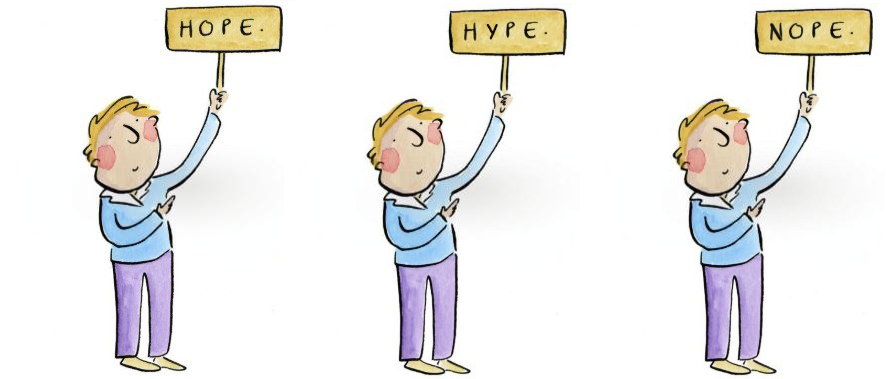
SLOPAGANDA IN WAR IS WHEN YOU
CAN’T TELL THE DIFFERENCE
BETWEEN HOPE AND HYPE AND YOU
ARE BLIND TO NOPE
By John Helmer, Moscow
This is the story of how recent calculations by President Donald Trump, Vladimir Zelensky, and President Vladimir Putin have come up short more quickly than they were expecting.
It’s a short story — Trump’s is the shortest of the three.
Trump and Zelensky have believed that the war which they, their allies, their media, and their voters – their predecessors too, going back a hundred years – have been waging against Russia was succeeding slowly, at a price they could afford to pay over time, but Putin could not. In time, they calculated, their war would break Putin in the Kremlin and push Russia into a chaos from which they would profit at the Russians’ expense.
It’s the strategy of overthrow from within, driven by pressure from without, which succeeded in just five years with Mikhail Gorbachev, and then in ten years with Boris Yeltsin. It’s also the same Anglo-American and German strategy which failed the first time with Vladimir Lenin, and failed the second time with Joseph Stalin.
On the evidence of the most recent Russian public opinion polling – measured by the Levada Centre of Moscow one week after Russian voters had gone to the national parliamentary election – this calculation isn’t entirely mistaken. “In September… the level of support for the actions of the Russian military remains high; seven out of ten respondents support the actions of the Russian military in Ukraine. At the same time, two-thirds of respondents are in favour of the transition to peace negotiations; only one-quarter for the continuation of hostilities. Most of the respondents would support Vladimir Putin’s decision if he decided ‘right now this week’ to end the military conflict with Ukraine. However, if the end of the conflict would require the return of the annexed territories, only one-third of the respondents would support such a decision.”
When the Levada pollsters divided their voter sample into those who would support Putin ending the war unconditionally — accepting a ceasefire in place and returning the annexed territories — and those who baulked at these conditions and opposed such a settlement, the result was a split between men and women, the higher and lesser educated, the big-city and provincial residents, and those who depend on the alternative media for their news instead of the mainstream media.
It is clear that the allied and Ukrainian targeting of the drone and missile attacks in the Russian hinterland has aimed at those young, urban, middle-class Russians already least supportive of continuing the war. This has been a political gaming strategy which Trump and his officials have shared with NATO and with the Kiev regime.
“Mr. Zelensky has to do one thing,” Trump tried explaining this strategy at an Irish golf course on September 13. “He has to stop knocking out diesel fuel in Russia. Let him go after targets, but not diesel fuel ’cause he’s causing a shortage of diesel fuel. This isn’t done by the Middle East, this is done by what’s happening with Russia and Ukraine. So, uh, we spoke to Mr. Zelensky about it. There are plenty of other targets. Don’t hit diesel fuel because that’s hurting, that’s hurting the world. We don’t want him to hit diesel fuel. He has to stop knocking out diesel fuel in Russia. Let him go after targets but not diesel fuel, because he’s causing a shortage of diesel fuel.”
Trump’s calculation was that he could appeal in this fashion to US voters to neutralize the blame they were putting on him for fuel price inflation, and thereby to reverse the decline in Republican Party votes ahead of the November 3 Congressional election. He was asking Zelensky to help; he was calling him mister.
This invited Putin’s calculation that he could drive a wedge between the two of them by offering Trump the diesel he wanted to turn into votes. In the five weeks since September 13, this is how the cards were played. Except that the diesel traders and US voters have not been persuaded: the New York Harbor marker price for diesel price went down from its mid-September peak; rose again; fell again; and is now higher than it was in response to Putin’s offer to start shipping Russian diesel in exchange for Trump suspending sanctions on the shipments and the tanker trade.
Not a drop of the Russian diesel has landed at a US port. Zelensky has continued to strike refineries and terminals in Rostov, Ryazan, and St Petersburg as his targets. Trump has dropped the mister.
“Zelensky,” he tweeted on October 18, “is using Diesel Refineries in Russia as a target, knowing that these attacks are seriously hurting the world diesel markets, including those in the United States. Farmers, ranchers, and businesses of all kinds are suffering greatly from this, but Russia is, nevertheless, sending, at a low price, millions of barrels of diesel to the World. Zelensky doesn’t care, and frankly, with all of the money that Europe is famously giving him, and that Crooked Joe Biden gave him in the past, he doesn’t want to end this war, and probably never did. He could have made a better deal two years ago than he can now. His country is in shambles, a large portion of his land is lost, his oceans and seas are gone, and his male population is low, wounded, and/or dead.”
Putin’s calculation is that with Trump he can achieve an end to the war on the Ukrainian battlefield for the time being; gain the time the General Staff is requesting to prepare for the wars the US alliance is directing on other fronts; to deliver terms which Russian voters will accept; and secure a stable succession for himself and the oligarchs on whom Putin has depended from the very beginning. Trump’s corruption was his opportunity, and he calculated there isn’t much time left to play it.
“In this situation, bribing Trump is the only card Putin has,” says a Moscow source in a position to know, “— and at the moment you can see for yourself, it is producing results.”
“There is no diesel deal with Trump worth anything. That is not the point. This non-deal is not the point at all. It is all about making Trump perform in a manner that can bring some benefit in money and some benefit in discord in NATO to the Russian side. That’s all it is, and it is working. There is no question bribes have already been paid. Whether for Trump family weddings, gifts, crypto business – you name it, it’s been paid. The Russian oligarchs and the Kremlin gladly play these games to free up their own money and take some advantage in the battlefield.”
“Trump will not hand the war and terms to the Russians but his actions will help. You can see the Europeans are coming around to the position that they cannot give any more money and they can’t act alone without the US. So the statements from Trump help in dissuading the weaker Europeans, and add to the pressure on the stronger ones. All this is helping. A corrupt Trump helps the Russians.”
“In this situation, continuing to dangle bribes and bribing his children, achieves the purpose.”
“The question for us is how much compromise Putin will make; I believe he will make a few, knowing fully well that the active phase of war does not give all the gains that were hoped for; and that passive long-term war with Europe needs preparation and freeing up the economy from sanctions. Plus, he is now admitting publicly that he did not foresee the attacks on data centres; refineries; and other civilian targets. This means there was nothing like the tacit understanding which Putin believed there was – just his expectation that the Americans, Brits, Germans and French wouldn’t go so far, would be deterred by the threats he and [Foreign Minister Sergei] Lavrov have been making. His expectations for Trump and the Americans have come out obviously wrong. After letting the Libyans, Syrians, Iranians, Cubans, Venezuelans down, Putin is sticking to expectations his enemies believe have proved wrong. That’s why they continue to be confident that if they keep up the war pressure for two more years, they will succeed against Putin as they had against Gorbachev and Yeltsin. They are confident Putin has no Stalin cards to play.”
By this past weekend, when Trump issued his justification for his Russian diesel deal for votes, Putin had announced to a bunker of front commanders his justification for the concessions he had apparently agreed with Trump.
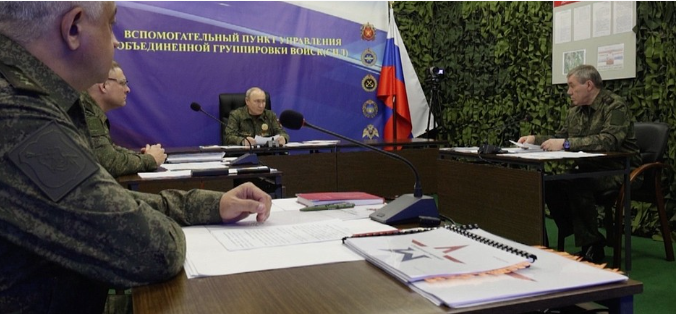
October 16: http://en.kremlin.ru/events/president/news/81009
“Just over 10 percent of the territory of the Donetsk People’s Republic and 16.5 percent of the Zaporozhye Region remain under the control of the Kiev regime. The Lugansk People’s Republic is entirely under our control. I would also like to recall that, following the incursion by the Armed Forces of Ukraine into Russia’s Kursk Region, the Russian Armed Forces were set the task of not only driving the enemy out of our territory but also establishing a security zone in the adjacent territory of Ukraine. This task is being carried out successfully. Our goal is to ensure the absolute security of Russia’s border regions for the future, and we do not intend to make this a subject of potential peace negotiations with Ukraine.”
“I would like to note that, in response to strikes by the Kiev authorities against our industrial facilities and fuel and energy infrastructure, the Russian Armed Forces continue to deliver strikes on enterprises of Ukraine’s military-industrial complex and infrastructure facilities…The commanders of the groups of forces must continue to carry out the tasks in strict accordance with the plan of the Special Military Operation. And, of course, we must continue to deliver massive and multiple strikes against the enemy’s military‑industrial complex and logistics centres.”
Trump had addressed his tweet to US voters. Zelensky’s reply had expressed the confidence that Trump’s vote pitch is in vain, and that after the votes are counted on November 3, Trump will have lost control of both the US Senate and the House of Representatives to Democratic Party majorities who will continue the war on the old terms and escalate the US and NATO pressure until Putin is broken.
The Levada poll of Russian voters was taken between September 23 and 30, and published on October 6. It confirms the steady increase in voter support for Putin to negotiate an end to the current fighting; and a parallel decline in confidence that military escalation can achieve the objectives of the Special Military Operation.
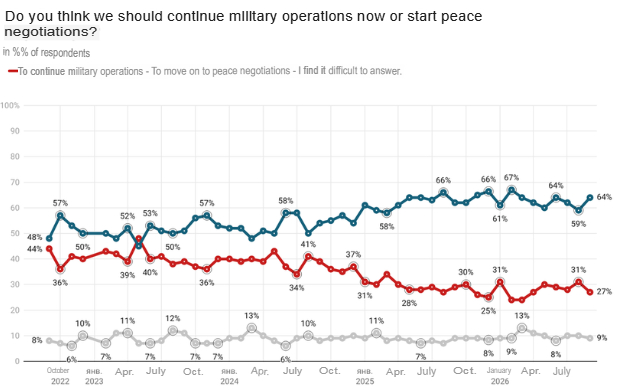
The polling of Russian voter approval and disapproval of the conditions for a war settlement is unique. It is well understood by the US, British and NATO intelligence agencies and political leaders. It is equally well understood in the Russian Security Council; it is being ignored by the Russian state media and their echoes in the pro-Russian podcasts.
According to the Levada report, “with the help of a random number generator, the survey participants were divided into two equal groups, each of which was asked to respond to one of two questions. In the first case, respondents were asked whether they would have supported or not supported the President’s decision to immediately end the military conflict without conditions. In the second case, the respondents were also asked whether they would have supported or supported the decision, but if the new territories were returned.”
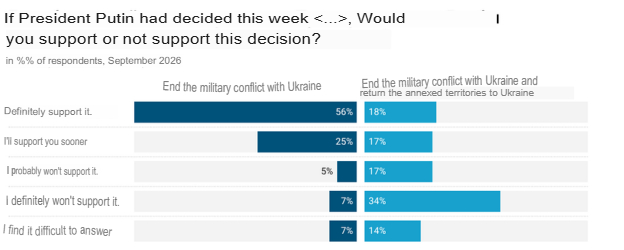
“Most, 81%, of the respondents would support Putin’s decision, if ‘this week’ he decided to stop the military conflict with Ukraine. The share of these supporters of the cessation of hostilities with the approval of the president has been slowly growing since May 2023 – by 19 percentage points. The share of opponents of this decision has been decreasing — by 21 percentage points over the same time period; it now amounts to 12%. At the same time, if Putin decided to stop the conflict ‘this week’, but with the condition of returning the annexed territories, his decision would draw the support of a noticeably smaller number of Russians – 35%. However, this has been growing over the past year and a half by 7 percentage points. The 51% who would not support the president’s decision to end the military conflict and return the new territories has been dwindling by 13 percentage points since February 2025; it has now reached the lowest level recorded over the three-year period of the polling.”
Splitting Russian voters like this by drone and missile targeting, and driving Putin against the Stavka – the coalition of military and civilian decision-makers – will be the US and NATO war aim after Trump’s calculations have run out of the political power to sustain them.
To report these calculations now as “a masterful Trump achievement” in splitting the US from the European allies, and cutting the Kiev regime off from its war financing, weapons and intelligence is slopaganda: that’s the projection of wishful thinking, discredited by the evidence of the past, but repeated into the future when there are rewards for unreasonable hope.