

Everything points to Trump’s rape of a thirteen year old girl,
and it really looks like there are at least two sexual assaults
of underage teenagers, if not several more.
SOTN Editor’s Note: Bear in mind that neither Trump’s hidden Khazarian masters and nor his conspicuous Zionist handlers needed to do anything else but threaten him with the story that follows (see headline above) being posted on the front page of the Internet. That’s it. And here we are now in the midst of the truly apocalyptic Iran war.
Now also be aware that the events described below in detail are just the sordid tip of the Trump iceberg where it concerns his personal and professional conduct throughout his once VERY close relationship with Jeffrey Epstein. According to DoJ insiders, the other 3 million Epstein files yet to be released are hanging over Trump’s head like the Sword of Damocles.
What very few Epsteingate investigators are cognizant of is that, when one of the prime suspects — Donald J. Trump — has been meticulously groomed over many years by the likes of primo Khazarian attorney Roy Cohn, anything goes. And Trump knows, if it really is the original Trump and not a doppelgänger, that Cohn’s close associates who set up the Epstein blackmail and bribery operation have compiled a dossier volumes thick covering his entire life. See: Donald Trump was stealthily assassinated in October of 1989.
In point of fact, half of Trump’s dossier may very well be patently fabricated photos and videos, fake audios and pics — of a highly scurrilous and compromising nature — which can be downloaded on the net with just one keystroke. This is how every POTUS since JFK has been strictly controlled to do and not do certain things. But because Trump was identified to be the “Moshiach”, the tools of coercion had to be greatly expanded and turbo-charged to ensure they would have maximum effect at the appointed times…such as launching an Armageddon-level war in the Middle East. See: Here, this is the top secret plan behind “MOSHIACH” Donald J. Trump
This Alt Media platform has been posting content since Trump first declared in June of 2015 about the most consequential series of long planned events in Israel leading up to the destruction of the Al-Aqsa Mosque (so that the the Zionists can build their Third Temple on the Temple Mount). However, to accomplish that world-changing goal, which is also an integral piece of the devastating Greater Israel project, a “Moshiach” had to first be identified.
Trump has been given the silver crown of the Torah
by 163 Orthodox rabbis signifying he’s the “Moshiach”.
All of which means that it’s quite likely the Netanyahu junta and/or Trump regime will use the the Iran war as cover to carry out the deliberate demolition of the whole Al-Aqsa Mosque complex. For there is nothing like the fog of war under which a false flag attack on the Temple Mount, via a coordinated IDF/MOSSAD military operation, can be successfully perpetrated… … …to be blamed on an errant Iranian missile, of course.
Remember, the world famous Wailing Wall, upon which every U.S. president is forced to reverently place their hand, and which is officially known as the Western Wall, is located on the western side of the Temple Mount in the Old City of Jerusalem. Just a cohencidence, surely.

State of the Nation
March 15, 2026
N.B. What follows is just a fraction of the scandalous material that’s being used to control and manipulate President Trump.
Did Donald Trump Rape A Minor? Here’s What We Know:
Everything We’ve Uncovered on The Topic Presented Without Bias For You To Decide
The Democracy Defender
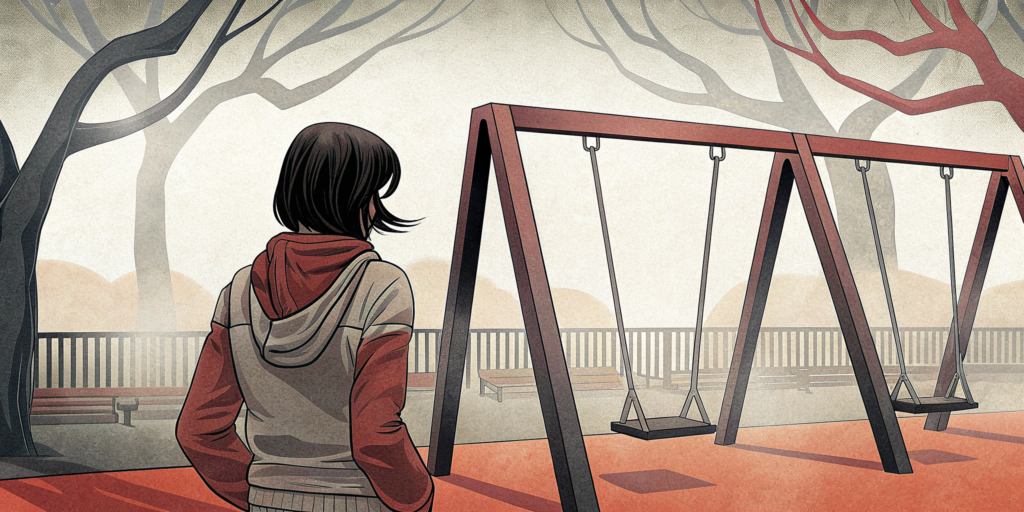
The Summer of 1994
According to the sworn affidavit filed in federal court, the plaintiff was thirteen years old in June 1994 when she traveled to New York City by bus with the intention of pursuing a modeling career. She had no portfolio and no connections. After being turned away by established agencies, she went to the Port Authority Bus Terminal to arrange her trip home.
It was there, she stated, that she was approached by a woman who introduced herself as “Tiffany”.
Tiffany offered the girl an invitation to parties at a Manhattan townhouse where she would meet people who could advance her career. And she would be paid for attending. The address was 9 East 71st Street — the Upper East Side residence of Jeffrey Epstein.
In a separate sworn declaration, the woman identified as Tiffany Doe confirmed this account. She described herself as an employee of Jeffrey Epstein from 1990 to 2000, whose primary role was the recruitment of “attractive adolescent women” to attend parties at his properties. She stated that she met the plaintiff at the Port Authority that summer and used the promise of modeling opportunities to bring her to Epstein’s residence. Tiffany Doe explicitly stated that both Donald Trump and Jeffrey Epstein were informed that the girl was thirteen years old.
The Encounters with Trump
Jane Doe’s affidavit described four parties at the Epstein townhouse that summer at which Donald Trump was present and engaged in sexual contact with her. She alleged the encounters escalated in severity.
During the first three occasions, Trump initiated sexual contact with the plaintiff. On the fourth occasion, according to the affidavit, Trump tied her to a bed, exposed himself, and forcibly raped her. The plaintiff stated that she “loudly pleaded” with him to stop. She alleged that Trump responded by striking her in the face with an open hand and shouting that he would do whatever he wanted.
Tiffany Doe’s declaration corroborated this account. She stated that she personally witnessed all four sexual encounters between Trump and the plaintiff, including the final assault.
The Allegations Against Epstein
The complaint also detailed abuse by Jeffrey Epstein. Jane Doe alleged that Epstein had sexual contact with her at two of the parties that summer. The second of these incidents, she stated, occurred after she had already been raped by Trump. According to the affidavit, Epstein forced himself on the girl and raped her “anally and vaginally” despite her pleas for him to stop. She alleged that Epstein struck her with closed fists while screaming that he, rather than Trump, should have been the one to take her virginity.
The “Maria” Threat
Tiffany Doe’s declaration contained one further allegation that would become a defining element of the case. She stated that she witnessed an occasion on which Trump forced both the thirteen-year-old plaintiff and a twelve-year-old girl identified only as “Maria” to perform oral sex on him, after which he physically abused both children.
Following the assaults, according to both affidavits, Trump and Epstein threatened that the plaintiff and her family would be physically harmed or killed if she ever disclosed what had happened. To reinforce the credibility of this threat, Trump allegedly told the plaintiff that she should keep quiet if she didn’t want to “disappear like Maria” — the twelve-year-old whom the plaintiff stated she never saw again after that encounter.
It was this threat, the plaintiff maintained, that kept her silent for over two decades. The reference to Maria — a child who was present, then simply gone — functioned not as an abstract warning but as a demonstration: this is what happens to girls who don’t comply.
A third witness, identified as Joan Doe, provided an affidavit stating that during the 1994–1995 school year — only months after the alleged assaults — the plaintiff had confided in her about the abuse. (This testimony was intended to establish that the account predated Trump’s entry into politics by more than two decades).
The Legal Odyssey
The allegations described in those affidavits did not reach a federal court in a straightforward way. The path from initial filing to final withdrawal spanned three separate complaints across two jurisdictions over a period of seven months — a trajectory shaped by procedural missteps, credibility challenges, and the gravitational weight of a presidential election.
The California Filing
The first lawsuit was filed on April 26, 2016, in the United States District Court for the Central District of California. The plaintiff filed pro se, without legal representation, under the name Katie Johnson. The complaint alleged rape and assault by Trump and Epstein in 1994, but was dismissed in May 2016 by a magistrate judge on procedural grounds — technical deficiencies in the filing and the absence of a viable statutory basis for the claims cited. The dismissal was without prejudice, leaving the plaintiff free to try again.
The Move to New York
The plaintiff subsequently retained Thomas Francis Meagher, a New Jersey-based patent attorney who acknowledged he had no prior experience in sexual assault litigation. Meagher later stated that he took the case after reading about the plaintiff’s situation online and felt compelled to help. On June 20, 2016, the lawsuit was refiled in the Southern District of New York — the jurisdiction where the alleged crimes occurred — as Case No. 1:16-cv-04642.
This version was substantially more developed. It introduced the sworn declarations of Tiffany Doe and Joan Doe, alleged charges including rape, sexual misconduct, assault, battery, and false imprisonment, and invoked diversity jurisdiction on the basis that the plaintiff was a California citizen while the defendants were based in New York.
A central legal hurdle was the statute of limitations. New York’s five-year window for sexual assault claims had long since expired. The plaintiff’s attorneys argued for tolling on the grounds of duress — that the death threats made by Trump and Epstein had continuously deprived the plaintiff of the freedom of will necessary to bring a case, and that this duress had never terminated. They cited New York precedent supporting the principle that a limitations period can be paused when a defendant’s coercive conduct prevents a plaintiff from filing.
The Final Filing and New Counsel
On September 30, 2016, with the presidential election five weeks away, the suit was refiled a third time as Case No. 1:16-cv-07673. The plaintiff had expanded her legal team to include Lisa Bloom, a victims’ rights attorney and legal commentator, and Cheney Mason, a criminal defense lawyer best known for his role on the Casey Anthony defense team. This final version added a defamation count against Trump in response to his public statements that the allegations were “categorically false” and “politically motivated.”
The Norm Lubow Problem
The credibility of the litigation took a significant hit when The Guardian reported that the initial filings were linked to Norm Lubow, a former television producer who had previously worked for the Jerry Springer Show and had a history of making sensational claims about public figures. An individual using the alias “Al Taylor” — whose contact details multiple sources identified as belonging to Lubow — had acted as a representative for the plaintiff and shopped a video of a woman recounting the rape allegations to media outlets, seeking a million dollars for the footage. These revelations gave the Trump campaign a powerful line of defense. His representatives called the suit a “sham” and a “complete fabrication.”
However, the Lubow connection does not account for what happened after the initial California filing. The case was refiled twice more, each time with greater legal sophistication. Three separate attorneys — Meagher, Bloom, and Mason — attached their professional reputations to the matter. A press conference was organized. Sworn affidavits from multiple witnesses were filed in federal court.
If the suit were merely a fabrication orchestrated by a former tabloid television producer, it is difficult to explain why 3 experienced lawyers would put their reputations on the line and continue to advance it. Lawyers always vet their clients claims. Or why a plaintiff would persist through seven months and 3 filings across two jurisdictions. AND While Lubow initially denied being “Al Taylor” to journalists, he later confirmed to Snopes in 2024 that he aided the accuser and promoted these claims, confirming that the accuser is a real person.
What Corroborated and What Didn’t
Meagher maintained throughout that the plaintiff was a real person — he had met with her in person and communicated with her extensively by video conference. Lisa Bloom likewise affirmed that her interactions with the plaintiff were legitimate. The sworn declarations of Tiffany Doe and Joan Doe remained unchallenged in the record, as the case never progressed to the discovery phase where they could be tested.
Beyond the direct testimony, investigative journalists noted that the perpetrator’s methodology described in the affidavits — recruitment of vulnerable girls through promises of money and modeling work, the use of a female procurer, the private residence setting — was consistent with the operational patterns later established in Epstein’s 2008 Florida prosecution, where victims described nearly identical recruitment tactics carried out by associates such as Sarah Kellen. (Editors note: Sarah = Tiffany?)
There was also the matter of the threats themselves. The plaintiff’s attorneys stated publicly that Jane Doe had received “numerous threats” during the course of the litigation — threats serious enough to cancel a planned press conference and ultimately abandon the case entirely.
As a matter of investigative logic, the existence of sustained intimidation aimed at silencing a complainant raises its own question: the decision to threaten a witness carries significant criminal liability, and it is not a risk typically assumed against a claim believed to be fabricated.
The Collapse
On November 2, 2016 — six days before the presidential election — a press conference was scheduled at the Los Angeles offices of lawyer Lisa Bloom. Jane Doe was expected to appear publicly for the first time, reveal her identity, and speak about the allegations in her own voice.
The event was canceled minutes before it was due to begin.
Bloom addressed the assembled media and explained that the plaintiff had been present at the office throughout the day, prepared to go through with it. But in the end, she could not. “She has decided that she’s too afraid to show her face,” Bloom said. “She’s been here all day ready to do it but unfortunately, she’s in terrible fear.”
In later interviews, Bloom described what she called the “calculus of fear” that confronts sexual assault accusers when the person they are accusing commands a vast public following. The plaintiff, she said, was not a public figure. She had no infrastructure to absorb the response. She was facing the prospect of being identified by name to an audience of millions, many of whom had already demonstrated a willingness to issue threats on behalf of the man she was accusing. (Editors note: The plaintiff would have been only 25 yrs old at that time )
Two days later, on November 4, 2016, the plaintiff’s attorneys filed a single-page voluntary dismissal. No official explanation accompanied the filing. The dismissal was without prejudice — meaning the plaintiff retained the legal right to refile — but no subsequent action was ever taken.
The Trump campaign advertised the withdrawal as vindication. His attorneys stated that the allegations were “disgusting at the highest level” and emphasized that Trump had never been given the opportunity to contest them in court — because, they argued, there was nothing to contest. The suit, in their framing, had been exposed as a politically motivated fraud that collapsed under its own weight.
What the dismissal actually established, in legal terms, was nothing. The claims were not adjudicated . It did not test the sworn affidavits. It did not determine whether the plaintiff or the defendants were telling the truth. It simply marked the point at which a 25 yr old woman who said she had been raped as a child by a man who was about to become president decided that the cost of continuing was more than she could bear.
What Came After
Jeffrey Epstein was arrested on federal sex trafficking charges in July 2019. He was found dead in his cell at the Metropolitan Correctional Center in Manhattan about a month later on August 10, 2019, in what was ruled a suicide. His death foreclosed any possibility of a criminal trial — and with it, any chance that the events described in the Jane Doe affidavits might have been tested through cross-examination or compelled discovery in a related proceeding.
But Epstein’s death did not end the documentary trail. It accelerated it.
In the years that followed, court-ordered unsealing of records from civil litigation brought thousands of pages of depositions, flight logs, and internal communications into public view. And in 2025 and 2026, a series of releases from federal agencies has added new dimensions to the picture.
The DOJ Slideshow and FBI Tips
Investigations by NPR and other outlets into unsealed Epstein-related materials revealed that the FBI had received and tracked tips involving Donald Trump as recently as 2020. While some were assessed as unverifiable, others received more serious treatment.
An internal Department of Justice slideshow, reported on in 2025, documented a separate allegation that Epstein had introduced a minor — aged thirteen to fifteen — to Trump in the 1980s. According to the summary, Trump forced the girl into a sex act; when she bit him in self-defense, he punched her in the head and removed her from the premises.
Another claim, involving an incident at Mar-a-Lago in 1994, was described within the DOJ as carrying “immense credibility” because it originated from a key government witness.
There was yet another narrative that mirrored the 1994 Jane Doe account: The House Oversight Committee subsequently investigated why the DOJ had withheld over fifty pages of FBI interviews and notes related to allegations that Trump had sexually abused a minor. These documents reportedly included conversations with a woman who accused Trump of abuse when she was a child…
The Trump-Epstein Friendship in Context
The allegations in the Jane Doe lawsuit center on the summer of 1994 — a period during which the social relationship between Donald Trump and Jeffrey Epstein was, by all available evidence, at its peak. The two men attended each other’s social events throughout the 1990s. In November 1993, Trump and Epstein reportedly hosted a private “calendar girl” competition at Trump Castle in Atlantic City for an audience of two: they were the only attendees. Flight logs indicate Trump flew on Epstein’s private aircraft at least seven times between 1993 and 1997. In 2002, Trump told New York magazine that he had known Epstein for fifteen years and called him a “terrific guy,” adding that Epstein was known to enjoy the company of women “on the younger side.”
None of this establishes that the events described in the Jane Doe affidavits occurred. What it establishes is proximity — the documented, acknowledged, and openly celebrated proximity of the two men at the precise moment these events were alleged to have taken place.
Where It Stands
The sworn affidavits of Jane Doe, Tiffany Doe, and Joan Doe remain filed in the records of the Southern District of New York. No criminal charges have been brought against Donald Trump in connection with the 1994 allegations. No civil trial has been held. The plaintiff has not refiled.
But the Jane Doe case does not sit alone in the record. The internal DOJ slideshow documented a separate allegation from the 1980s in which a minor was introduced to Trump through Epstein and subjected to a forced sex act. A key government witness provided testimony regarding a 1994 incident at Mar-a-Lago that the DOJ assessed as carrying “immense credibility.” The House Oversight Committee found that over fifty pages of FBI interviews and notes relating to allegations of Trump’s sexual abuse of a minor had been withheld from public databases. These are not echoes of the Jane Doe complaint — they are independent accounts, from different accusers, describing similar conduct across a span of more than a decade.
Beyond the assault allegations, a broader pattern of documented conduct toward minors extends outside the Epstein network entirely. During the 1997 Miss Teen USA pageant, multiple contestants — some as young as fifteen — reported that Trump entered their dressing rooms while they were undressed. At least five to seven young women have gone on record describing these incidents.
Taken together, the documented allegations involving minors form a continuity that is difficult to dismiss as coincidence or fabrication…
Sources and Citations
Court Filings
- Jane Doe v. Donald J. Trump and Jeffrey E. Epstein, Case 1:16-cv-04642-RA, Complaint, U.S. District Court, Southern District of New York, filed June 20, 2016. Courthouse News Service
- Jane Doe v. Donald J. Trump and Jeffrey E. Epstein, Case 1:16-cv-04642-RA, Document 1-1, Affidavit of Jane Doe, filed June 20, 2016. Courthouse News Service
- Jane Doe v. Donald J. Trump and Jeffrey E. Epstein, Case 1:16-cv-04642-RA, Document 1-2, Declaration of Tiffany Doe, filed June 20, 2016. Courthouse News Service
- Jane Doe v. Donald J. Trump and Jeffrey E. Epstein, Case 1:16-cv-07673, Complaint, U.S. District Court, Southern District of New York, filed September 30, 2016. Hachette Book Group
- Jane Doe v. Donald J. Trump and Jeffrey E. Epstein, Case 1:16-cv-07673-UA, Document 4, Amended Complaint, filed October 3, 2016. AWS / PACER
- Dismissal Notice: Doe v. Trump & Epstein, November 4, 2016. Scribd
Government and Law Enforcement Records
- Jeffrey Epstein Flight Logs, Teterboro to Palm Beach. DocumentCloud
- U.S. Department of Justice, Epstein Files release, January 30, 2026. Referenced via: Epstein files — Wikipedia
- United States v. Jeffrey Epstein, Indictment, U.S. District Court, Southern District of New York. Justice.gov
- DOJ internal slideshow and FBI interview notes regarding allegations of Trump’s sexual abuse of a minor, reported February 2026. Martin Plaut
News and Investigative Reporting
- “Rape lawsuits against Donald Trump linked to former TV producer,” The Guardian, July 7, 2016. The Guardian
- “Woman who accused Donald Trump of raping her at 13 drops lawsuit,” The Guardian, November 4, 2016. The Guardian
- “The woman who sued Donald Trump for alleged child rape is going public with her story,” Quartz, November 2, 2016. Quartz
- “Trump Rape Accuser Dismisses New York Case,” Courthouse News Service, November 4, 2016. Courthouse News
- “Wait, ‘Katie Johnson’ actually exists?” Sacramento News & Review, October 21, 2019. Sacramento News & Review
- “The Trump-Epstein files controversy, explained,” El País (English), July 18, 2025. El País
- “What Is — and Isn’t — in the Newly Released Epstein Files,” TIME, 2026. TIME
- “Why The New Child Rape Case Filed Against Donald Trump Should Not Be Ignored,” Lisa Bloom / The Bloom Firm. The Bloom Firm
- Lisa Bloom on Why Accusers Are Speaking Out Against Trump, YouTube. YouTube
Reference and Background
- “Relationship of Donald Trump and Jeffrey Epstein,” Wikipedia. Wikipedia
- “Litigation involving Jeffrey Epstein,” Wikipedia. Wikipedia
- “Maria Farmer,” Wikipedia. Wikipedia
- “Donald Trump sexual misconduct allegations,” Wikipedia. Wikipedia
- Carroll v. Trump, Docket No. 23-793-cv, U.S. Court of Appeals for the Second Circuit, December 30, 2024. GovInfo
- Doe v. United States, Case 9:08-cv-80804-KAM, U.S. District Court, Southern District of Florida, October 3, 2008. GovInfo
Legal Disclaimer
This article is a work of investigative journalism based on publicly available court filings, sworn affidavits, government records, and published news reporting. All allegations described herein are drawn from these documented sources and are presented as allegations, not established facts. The civil lawsuit Jane Doe v. Donald J. Trump and Jeffrey E. Epstein was voluntarily dismissed before trial. No court has made findings of fact regarding the claims. Donald Trump has denied the allegations and has not been criminally charged in connection with the incidents described. Jeffrey Epstein died in federal custody in 2019 before facing trial on related charges.
The inclusion of any individual’s name in this article does not constitute an accusation of criminal conduct. Readers are encouraged to review the primary source documents linked in the citations above and to draw their own conclusions.
This article is not legal advice and should not be construed as such.
____
https://thedemocracydefender.substack.com/p/did-donald-trump-rape-a-minor-heres