
Russia’s $900M Missile System Just Landed in Iran — America Has No Defense Against It
By Claudio Resta
Russia just delivered a $900 million integrated weapons package to Iran.
• 4 S-400 battalions with 384 missiles
• 24 Iskander-M launchers threatening every US base in the Gulf
• 8 Bastion-P coastal systems with 64 anti-ship missiles
• Nebo-M radar that can detect stealth aircraft at 600km .
The Pentagon has privately admitted: “Assume all offensive operations are now contested.”
Russia just delivered a weapons package to Iran that makes everything America has built in the Middle East over the last 40 years strategically obsolete.
Not a single missile system, not a symbolic transfer, not the kind of arms deal that shifts balance marginally and gives both sides time to adjust. Russia delivered an integrated $900 million combined strike and defense architecture that the Pentagon has privately admitted it cannot defeat.
$900 million, 27 cargo aircraft, 14 days of continuous airlift operations flying from three Russian military airfields directly into Iranian territory.
The largest single weapons transfer between major military powers since the Cold War.
And the contents of those aircraft changed the rules of engagement for every American soldier, sailor, and pilot operating within 2,000 kilometers of Iranian borders.
Here’s what landed in Iran. The S400 Triumph air defense system, four complete battalions, 32 launchers, 384 missiles capable of engaging targets at ranges up to 400 km and altitudes up to 30 km.
The system that NATO has spent a decade trying to counter and has never successfully penetrated in combat conditions.
The Iskander M tactical ballistic missile system. 24 launchers, 96 missiles. Range 500 km. Accuracy 5 m. Flight profile quasi ballistic with terminal maneuvering that no existing American defensive system has ever intercepted in operational testing.
The Bastion P coastal defense system, eight launchers, 64 P800 Oniks missiles, the anti-ship weapon that travels at Mach 2.5 at sea skimming altitude and has an engagement range that covers the entire Persian Gulf from Iranian territory.
And the component that makes all of these systems exponentially more lethal, the Nebo integrated radar complex, the mobile radar system that can detect stealth aircraft at ranges exceeding 600 km. the system that makes the F-35’s $1.7 trillion dollars in visibility investment partially worthless over Iranian airspace.
The Pentagon received confirmation of the delivery 72 hours ago. The response was not a press conference, not a diplomatic protest, not the usual theater of official concern that accomplishes nothing.
The response was an emergency classified directive to all regional commanders containing seven words that tell you everything about what this delivery means.
“Assume all offensive operations are now contested.”
That sentence issued by the chairman of the Joint Chiefs to every American military installation in the Middle East is the most significant admission of vulnerability since the Vietnam War.
Here’s what this $900 million package actually does and why every American military planner who understands these systems is privately terrified.
The S400 creates what military strategists call an anti-access area denial bubble. Within 400 kilometers of the S400 launchers, every aircraft operating at every altitude faces engagement by missiles traveling at Mach 12.
The 40N6 long-range interceptor can hit targets at the edge of space. The 48N6 can engage multiple aircraft simultaneously at medium ranges.
The 9M96 provides point defense against cruise missiles and precision munitions. Let me translate that into operational reality.
An American F-35 approaching Iranian airspace to conduct a strike mission faces detection at 600 kilometers by the Neibo M radar.
The aircraft’s stealth characteristics, designed to reduce radar cross-section against older systems, provide limited protection against the NeboM’s multiband tracking.
By the time the F-35 reaches weapon release range approximately 150 km from target, it has been tracked for 7 minutes.
Interceptor missiles have been allocated. Launch solutions have been calculated. The F-35 can attempt evasion. It can deploy countermeasures. It can execute hygiene maneuvers designed to break radar lock.
None of these tactics have been tested against the S400 in combat. None of them have demonstrated effectiveness in exercises against Russian operated systems. And the S400 launches four missiles per target to ensure kill probability exceeds 95%. The math is simple.
Every aircraft America sends into Iranian airspace has a significant probability of not returning. not possible probability, significant probability, the difference between confidence and uncertainty, the difference between dominance and contest. But the S400 is the defensive component.
The Iskander M is the offensive component, and the Iskander changes everything about how Iran can strike American assets.
The Iskander M flies at Mach 6 to Mach 7. It maneuvers during its terminal phase. It carries a 700 kg warhead that can destroy any military installation it hits. and its 500 kilometer range puts every American base in the Gulf within strike envelope from Iranian territory.
Al- Uade air base in Qatar, 700 km from Iran, within range. Al-Udid air base in UAE, 400 km from Iran, within range.
Camp Arifjan in Kuwait, 500 km from Iran. within range.
Every aircraft, every fuel depot, every command center, every ammunition storage facility at every American installation in the Gulf can now be hit by a weapon that no American defensive system has ever successfully intercepted.
The Patriot system protects these bases. Patriot was designed for a different era. It can engage ballistic missiles following predictable trajectories. It has never demonstrated capability against maneuvering quasi ballistic weapons traveling at Mach 7.
The system might work. the system might not work.
Nobody knows because nobody has ever tested it against this specific threat in combat conditions. That uncertainty is itself a strategic defeat. But the land-based systems, as transformative as they are, aren’t even the most dangerous element of what Russia just delivered.
Because the Bastion P coastal defense system changes the naval equation in ways that make the Persian Gulf effectively a no-go zone for American warships.
The P800 Onyx missile travels at Mach 2.5 at sea skimming altitude with a range of 500 km when launched from coastal positions. The missile can be programmed to approach targets from multiple angles. It can perform evasive maneuvers during terminal flight and it carries a 300 kg warhead designed to penetrate naval armor and detonate inside the ship.
The USS Abraham Lincoln carrier strike group is currently operating in the Arabian Sea.
That carrier carrying 5,000 American sailors and representing 13 billion in construction costs is now within range of Bastion P batteries positioned along the Iranian coastline.
The Aegis combat system that protects the carrier has never been tested against mass P800 attacks. Simulations suggest that a salvo of 12 or more ONX missiles approaching from multiple vectors at Mach 2.5 would saturate the defensive envelope. Some missiles would be intercepted, not all missiles would be intercepted.
Russia sent the integration. These systems are now working.
The Nebo M radar feeds target and the Iskander simultaneously.
The Bastion P receives maritime surveillance data from Russian satellite networks that Iran now has access to system talks to every other system in real time. An American aircraft approaching from the south triggers Neibo M detection. The S400 allocates interceptors.
Simultaneously, Iskander batteries received the detection data and calculate whether the aircraft originated from a base within strike range. If it did, Iskander missiles launch toward that base while the aircraft is still inbound toward Iran.
The American pilot is trying to complete a strike mission. His home base is being destroyed while he’s in the air. If he survives the S400 engagement, he returns to a runway that no longer exists. This is integrated warfare. This is systems thinking. This is how Russia fights.
And Russia just taught Iran how to do it. Let’s talk about what’s happening across the American military right now because the response to this delivery has been immediate and dramatic in ways that tell you exactly how serious this is.
Centcom has issued what officials describe as operational pause directives for all non-essential missions within S400 range.
Translation: American aircraft have stopped flying toward Iran, not because anyone ordered a standdown, because pilots and commanders are refusing to fly missions with the threat profiles that now exist.
This isn’t cowardice. This is mathematics. Sending a hundred million dollar aircraft and a trained pilot into an environment where the probability of loss exceeds acceptable thresholds is not courage. It’s waste.
And the American military doesn’t waste assets on operations that cannot succeed.
The carrier strike groups are repositioning again.
The Abraham Lincoln, which was operating 400 km from the straight of Hormuz 96 hours ago, is now 1/200 km away and moving further.
The geometry of Bastion P coverage has made close approach tactically indefensible. You cannot project power if you cannot approach the projection zone. The Persian Gulf, which American carriers have dominated for 40 years, is now contested water.
Not theoretically contested, actually contested. The ships are moving because staying is too dangerous.
Meanwhile, the diplomatic response has been chaos. Secretary of State summoned the Russian ambassador within 6 hours of delivery confirmation. The meeting lasted 34 minutes.
The Russian ambassador reportedly stated that Russia’s military cooperation with sovereign nations is not subject to American approval and that the weapons are defensive in nature and pose no threat to nations that do not attack Iran.
That statement is technically accurate and strategically devastating. The S400 is defensive.
The Bastion P is defensive.
The Iskander can be characterized as defensive if you define it as response capability rather than first strike capability.
Russia has framed the delivery as protection for Iran against American aggression.
And here’s the part that makes the diplomatic situation impossible. Russia isn’t wrong. America has been conducting strikes against Iranian assets for years.
American sanctions have crushed the Iranian economy. American rhetoric has explicitly threatened regime change.
From Iran’s perspective, and from Russia’s perspective, these weapons are exactly what they claim to be, defense against an adversary that has demonstrated hostile intent.
America cannot credibly argue that Iran doesn’t need defensive weapons when America has been attacking Iranian interests continuously.
The moral high ground that underpins diplomatic pressure doesn’t exist. Meanwhile, allies are calculating.
Saudi Arabia has requested emergency consultations with Washington about the changing regional security environment.
Translation: Saudi Arabia is asking whether American security guarantees are still valid when American forces cannot operate freely against Iranian threats.
Israel has gone into full strategic reassessment mode.
The strike packages against Iranian nuclear facilities that Israeli planners have developed for decades just became significantly more costly. S400 coverage extends across the approach routes. Losses would be substantial. Success is no longer assured.
The UAE has quietly begun reaching out to Tehran through back channels.
The Emirates has always hedged between American alliance and regional accommodation.
With American power projection suddenly questionable, the hedge is shifting toward accommodation.
The alliance structure America has built in the Gulf over 40 years is reconsidering its foundations.
And the reconsideration is happening because a $900 million weapons delivery just changed what American power can actually accomplish.
Let’s be honest about the strategic situation America actually faces because the official narrative is designed to maintain confidence rather than acknowledge reality.
For 40 years, American strategy in the Middle East has rested on one fundamental assumption.
American military technology is superior to anything adversaries possess.
That superiority allows power projection. Power projection allows influence. Influence allows outcomes favorable to American interests. That assumption just died in a cargo hold.
The weapons Russia delivered are not inferior to American equivalents. In some cases, they’re superior.
The S400 is widely considered more capable than the American Patriot system.
The Iskander has characteristics that no American tactical missile matches.
The Bastion P is a naval threat that American defensive systems are not optimized to counter.
Russia has spent 20 years watching American military operations, studying tactics, analyzing vulnerabilities, developing systems specifically designed to counter American strengths.
And Russia just handed those systems to America’s primary regional adversary.
Consider what this means for operational planning. Every strike mission against Iran now requires calculating potential aircraft losses, not zero losses, significant losses.
The assumption that American air power can operate with impunity no longer holds.
Every naval deployment near Iran now requires calculating potential ship losses, not damaged ships, sunk ships.
Thousands of American sailors at the bottom of the Gulf is now a scenario that planners must consider. Every base in the Gulf region now requires calculating potential destruction, not harassment attacks, complete destruction.
Iskander accuracy is measured in meters. A single hit on a fuel depot or ammunition storage creates catastrophic secondary effects. The planning assumptions that have guided American military operations for a generation no longer apply.
And no one has figured out what assumptions should replace them. Here’s the part that makes this truly dangerous.
The Pentagon knows these weapons create strategic paralysis.
Russia knows the Pentagon knows.
Iran knows both of the know.
And the knowledge that American offensive operations have become dramatically more costly changes Iranian behavior.
Iran can be more aggressive because Iranian leadership understands that American retaliation is no longer automatic. When retaliation means losing aircraft and pilots, losing ships and sailors, losing bases and soldiers, the calculus changes.
The threshold for what Iran can do without triggering response rises significantly. This is deterrence in reverse.
America has spent decades deterring Iranian aggression through superior military capability.
Russia just gave Iran the capability to deter American response. the leverage has flipped and the consequences of that flip will play out across every conflict, every negotiation, every crisis in the Middle East for the next decade.
So, let’s be absolutely clear about what has happened and what it means.
Russia delivered a $900 million integrated weapons package to Iran, 27 cargo aircraft, 14 days of airlift operations, the largest military transfer between major powers since the Cold War.

Four S400 battalions now protect Iranian airspace with 384 interceptor missiles. Detection range 600 km, engagement range 400 km. Every American stealth aircraft is now visible over Iran.
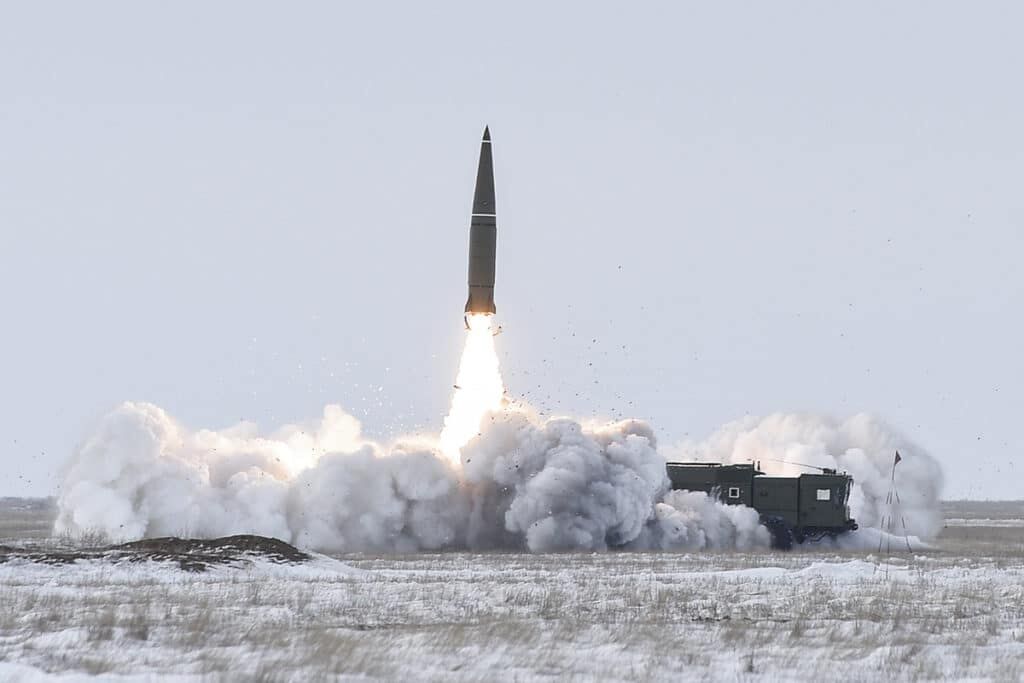
24 Iskander M launchers threaten every American base in the Gulf with quasi ballistic missiles that no American defensive system has ever intercepted. Accuracy 5 meters, warhead 700 kg.

Eight Bastian Punchers hold American warships at risk with 64 P800 Oniks missiles, Mach 2.5 velocity, sea skimming approach, saturation capability that exceeds Aegis defensive capacity.

And the Nebo M radar complex networks everything together. Detection of American aircraft feeds targeting data to both defensive and offensive systems simultaneously. The kill chain is integrated. The response is automatic.
American aircraft have stopped flying toward Iran. Carriers have retreated 800 km from previous operating positions.
Centcom has issued operational pause directives. The chairman of the joint chiefs told regional commanders to assume all offensive operations are now contested. Allies are recalculating. Saudi Arabia is asking uncomfortable questions.
Israel is reassessing strike options. The UAE is opening back channels to Tehran. The alliance structure is wobbling.
And in Moscow, Vladimir Putin is watching the American response and understanding that the investment was worth every ruble. $900 million to neutralize 40 years of American regional dominance.
$900 million to shift the strategic balance. $900 million to demonstrate that American military superiority has limits that Russia can exploit. The weapons are delivered. The systems are operational.
The integration is complete. America has no defense against what Iran now possesses. Not theoretically no defense.
Actually, no defense. The systems that could counter these weapons don’t exist.
The development programs that might produce them won’t deliver for years. And the threat exists now.
The military balance of the Middle East didn’t shift gradually. It shifted in 27 cargo flights. It shifted in $900 million of Russian hardware.
It shifted because Russia decided that American power in the region had lasted long enough.
Pay attention because the era of unchallenged American military dominance in the Middle East ended when those aircraft landed. What comes next is a competition America hasn’t faced since the Cold War, and nobody knows how to win.
If you doubt that that presentation is trustworthy when it describes “what this $900 million package actually does and why every American military planner who understands these systems is privately terrified,” click onto the following 20-minute video commentary from Rachel Maddow, the popular-in-the-U.S. liberal neoconservative (pro-U.S.-empire) MSNBC-TV news-commentator, who expresses why she is “terrified” at this (and that hater of the Governments her Government wants to destroy, even acknowledges that Russia’s S-400 air-defense system “arguably the most advanced missile defense system on the planet right now”):