
…SERIOUS FRIGGIN PROBLEM ! ! !
“When the same ecosystem of companies is investing in, financing, buying from, and depending on one another, the distinction between organic demand and capital being recycled through the system becomes critically important. And when enormous portions of the global equity market are priced around the assumption that this arrangement can continue indefinitely, a loss of confidence in the company at its center can become a much bigger problem than a single stock declining.”
SOTN Editor’s Note: No other Alt Media platform on the Internet today has repeatedly screamed that the rapidly inflating AI Bubble was intentionally fabricated by the New World Order globalist cabal as a pretext to carry out the long planned controlled demolition of the Global Economic & Financial System (GE&FS). As a matter of fact, SOTN is not aware of a single other alternative financial/economic author (or site) who even refers to the central plot here: that the AI Bubble was purposefully created to interpenetrate all of the other immense bubbles (equity and bond, commodity and currency, real estate and insurance, derivative and carbon, AI and energy, etc.) which exist across the GE&FS so that when that one pops, they all do. Now read the excerpt above taken from the article posted below in its entirety.
Those two sentences taken together indisputably confirm one thing more than any other with the exception of complete and total financial ruin and economic collapse: INTENTIONALITY.
Got it?
If not, you better get and get fast if you have any substantial investments particularly in either the stock or bond markets.
For more vital perspective on this “SERIOUS FRIGGIN PROBLEM: please consider the following data points:
“Clearly the Financial Masters of the Universe (FMOTU) are frenetically engineering a final scenario that they hope will translate to the “Biggest Sucker’s Rally Of All Time”. What better way to effectuate the largest transfer of wealth in history from the 99% to the 1% than to con them into the most artificially inflated bubble market of all time, where all markets–equity and bond, commodity and currency, real estate and insurance, derivative and carbon, AI and energy—now interpenetrate each other as never before so that when one bubble pops, they all do. Goodbye middle class; hello indentured servants and slaves.”
(Source: This Greatest Financial Fraud and Economic Scam of the Third Millennium was…..)
State of the Nation
November 22, 2026
The Best Is Yet To Come Undone
Four months ago, I warned the AI trade would unravel this year. Now Nvidia is cracking, the contagion is spreading, and the worst may still be ahead.
Quoth the Raven
QTR’s Fringe Finance
Today’s column is going to be two parts. First, I’m going to review a lot of what I’ve written about on this blog the last two weeks. Then, I’m going to offer my take on where Nvidia, the market, other sectors, and everything else is going forward.
Punk band Lit had a great song called “The Best Is Yet To Come (Undone).”
After Friday’s market crash and headlines suggesting that the SEC could be investigating Nvidia’s accounting, I can’t think of a more appropriate title for my column this weekend.
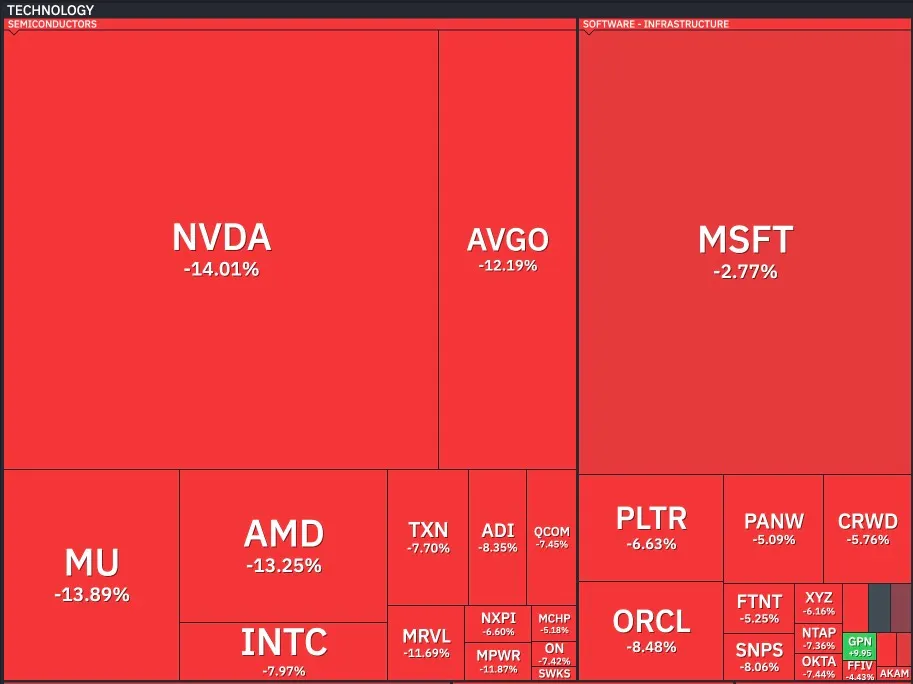
Because if there’s one thing I’ve been trying to communicate to readers over the last four months, it’s that the unraveling of the AI bubble was never going to be a single event, a single bad earnings report, or a single afternoon of panic selling. It was going to be a chain reaction, one in which deteriorating sentiment, increasingly questionable financing arrangements, political uncertainty, and scrutiny of the companies at the center of the boom could begin feeding on one another.
And as much as Wall Street has wanted to declare the worst over at virtually every opportunity over the last two weeks, my argument has consistently been that the next shoe probably hasn’t even dropped yet.
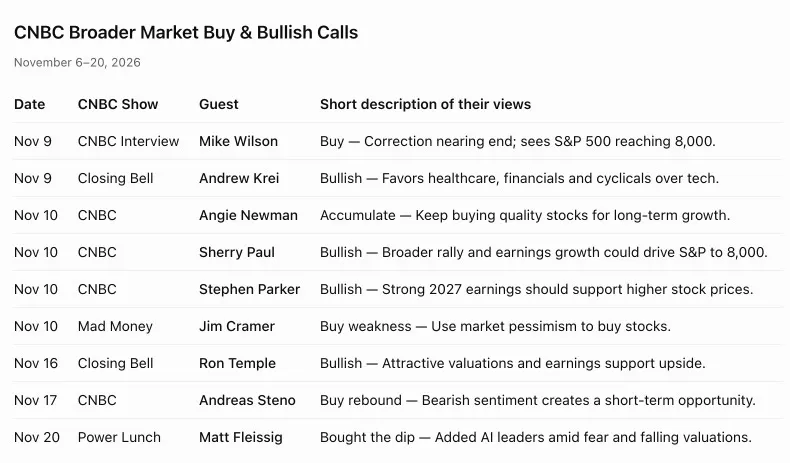
Meanwhile, over on CNBC in just the last two weeks, it appears to have been a love-fest for Nvidia while it’s been plunging -43% in the last month and -20% in the last week alone:

And it appears to have been a love fest for the overall market as well…
Now before getting into where I think Nvidia and the broader market go from here, I want to spend a few minutes reviewing just how on top of things we’ve been over the last four months.
Not because I feel compelled to take a victory lap every time the market takes a shit, but because in my initial call for an AI crash this year in August, I also made a prediction about timing, which I almost never do. I’m sure I’ll be wrong and/or humbled again at some point soon, but as for then, the bond market spiking had my conviction through the roof, and here we are 4 months later looking like we were ahead of the game.

The Real AI Crash Will Start This Year
I’ve been laying out, in real time, why I thought this trade was vulnerable (noting eight specific bear cases from eight of my favorite investors heading into Fall), what could cause it to break, and why the initial selling would likely be followed by developments that investors hadn’t even begun to consider.
And while plenty of people have been happy to tell me I’m too bearish, a fearmonger, or simply beating a dead horse, I think the last several weeks have offered a pretty compelling answer to those criticisms. As I said back in July, your delusion doesn’t make me a doomer. And said more recently, let the morons eat cake…I’m done trying to convince the world they’re staring into the abyss.
A Quick Rewind To August…
On August 17, I published The Real AI Crash Will Start This Year. It was the first time all year that I had made a serious attempt to call the timing of the AI bubble bursting.
I argued that the end of 2026 and beginning of 2027 could finally mark the point at which years of speculative excess, extraordinary valuations, and increasingly circular investment arrangements began to unwind. More specifically, I was concerned about the enormous amount of capital being committed to AI infrastructure, the questionable economics underpinning some of that spending, and the extent to which global financial markets had become dependent on a handful of technology companies continuing to deliver perfection.
One of my central arguments was that investors had confused the extraordinary potential of artificial intelligence with the idea that every dollar being spent to develop it would necessarily generate an attractive return.
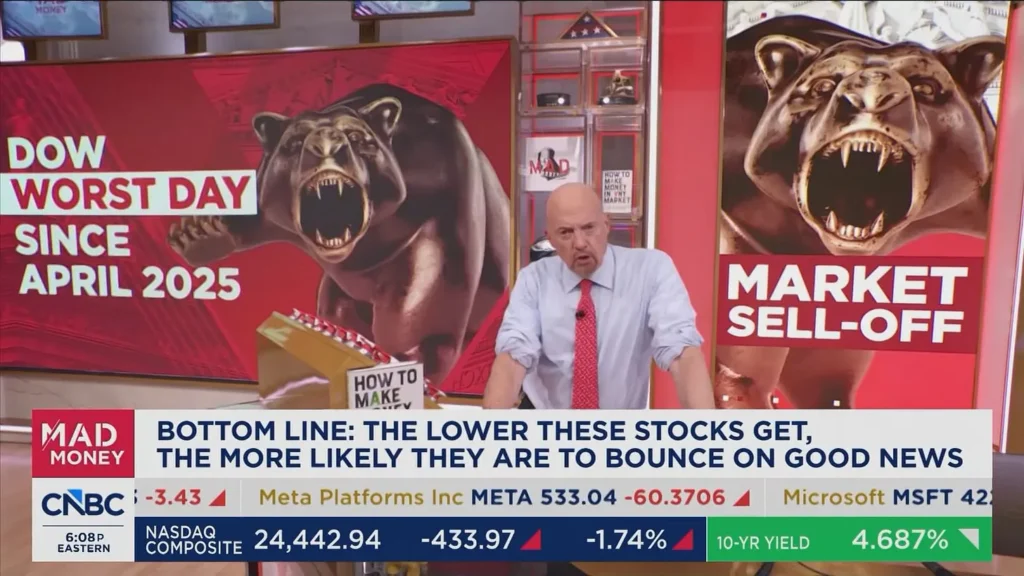
As I wrote at the time, the technology could be transformative while the capital cycle supporting it had already moved far beyond what the economics could reasonably justify. I pointed to the railroads, fiber optics, and the dot-com bubble as examples of how genuinely revolutionary technologies could produce extraordinary financial destruction for investors who paid the wrong price or financed too much infrastructure too early. The internet ultimately changed the world, but that didn’t stop the Nasdaq from losing roughly 80% of its value after the technology bubble burst.
I also focused specifically on Nvidia and the increasingly circular financing arrangements supporting the AI ecosystem. My concern was that the company had become so central to the market, and its chips so central to the investment plans of other companies, that any serious shock to Nvidia could produce consequences far beyond its own shareholders. Here’s what some of that web looks like, courtesy of Zero Hedge:
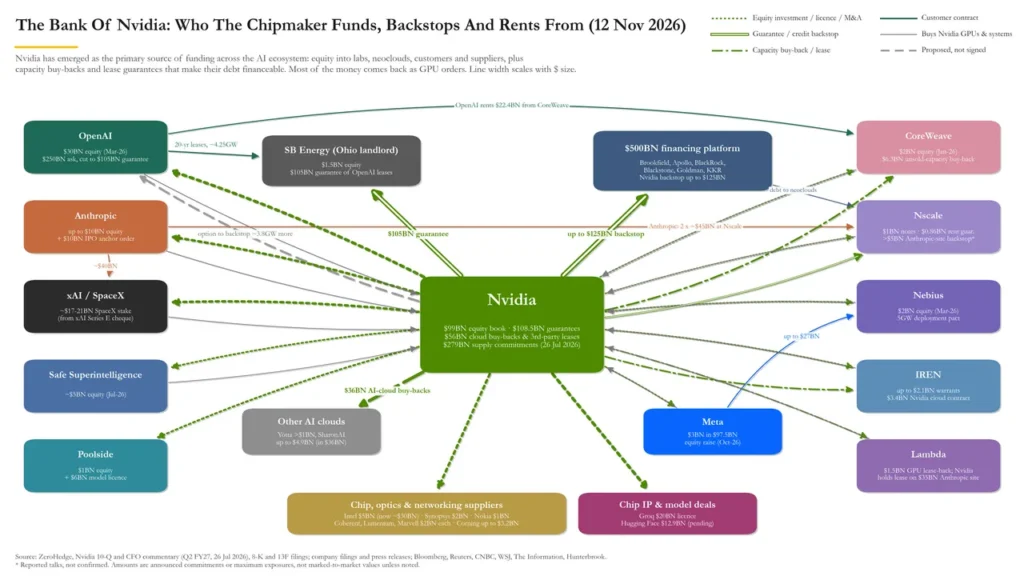
When the same ecosystem of companies is investing in, financing, buying from, and depending on one another, the distinction between organic demand and capital being recycled through the system becomes critically important. And when enormous portions of the global equity market are priced around the assumption that this arrangement can continue indefinitely, a loss of confidence in the company at its center can become a much bigger problem than a single stock declining.
I warned that such a shock could cause sentiment to change almost instantly across millions of trading desks. Four months later, Nvidia has reportedly fallen roughly 40% in a month, and the market is being forced to reconsider many of the assumptions that seemed untouchable when I published that piece.
I wasn’t arguing that AI was fake, that Nvidia didn’t make extraordinary products, or that the technology wasn’t going to change the world. I was arguing that the financial structure built around the boom had become dangerously vulnerable to disappointment. Something to remember when looking at how the stock has performed over the last month…
Then Came the Midterms
In late September, stress was showing up in the credit markets and Oracle was cancelling data center projects and trying to convince the public it was all totally normal and everything was fine, which I noted it obviously wasn’t.
By October, the Nasdaq was beginning to show signs of weakness, and I started writing repeatedly about how the approaching midterm elections could introduce another major catalyst for a market already looking increasingly fragile. On October 20th, as the market was starting to show some weakness, I urged my subscribers to remember that “knives keep falling” as CoreWeave, which I had started warning about in July 2025, specifically came under pressure:

Sometimes, Knives Just Keep Falling
On October 31, I published Could Democrats Crash This Market?, arguing that investors were underestimating how dramatically the regulatory and political environment could change if Democrats took control of Congress. The market had enjoyed years of relatively accommodating regulatory conditions, particularly in technology, banking, cryptocurrency, and private credit. I thought a Democratic victory could change that calculus quickly, even without a single piece of new legislation being passed.
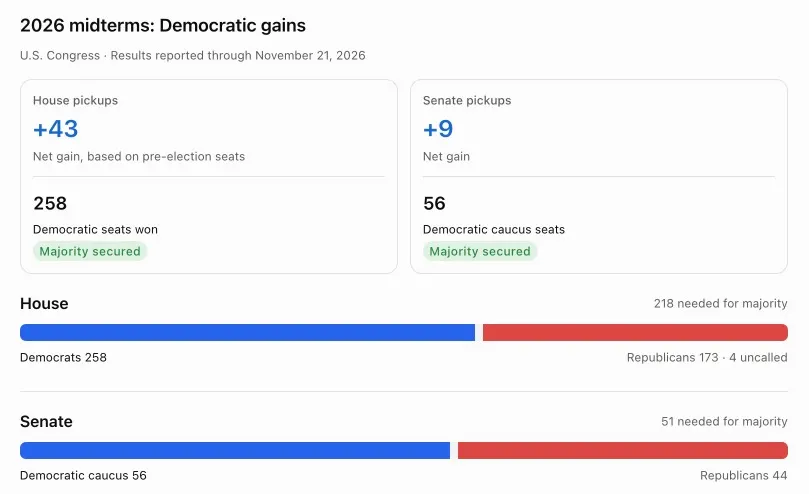
My argument was that congressional control meant subpoena power, committee investigations, hearings, and the ability to put corporate executives and previously unquestioned business practices under a microscope. I specifically pointed to the possibility of increased scrutiny of AI financing arrangements, data-center subsidies, corporate conflicts of interest, and opaque private-market valuations.
These were precisely the types of arrangements I had already been questioning for months, and I believed the political environment could become another source of pressure on an already overstretched trade. The election didn’t need to cause the bubble to burst on its own. It simply needed to introduce another reason for investors to reassess the extraordinary assumptions embedded in stock prices.
Then Democrats swept the midterms, and the market initially reacted with a remarkable reversal. Nasdaq futures plunged more than 2% overnight before reversing sharply higher, with investors apparently deciding that political gridlock was something to celebrate.
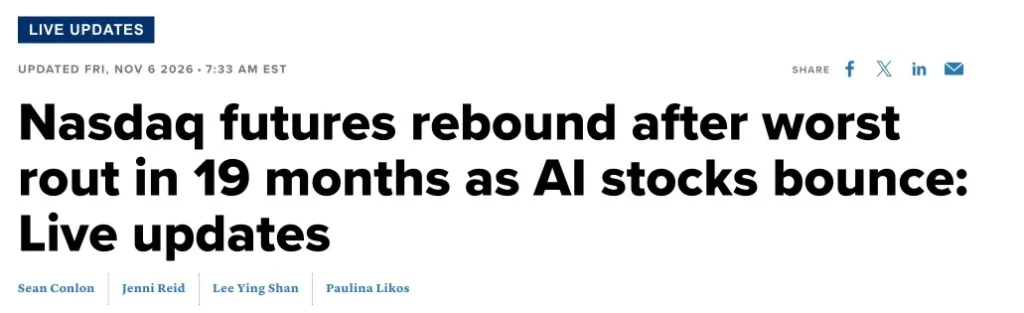
On November 4, while Wall Street was busy trying to interpret the rally as bullish, I published Bearish Beyond This ‘Blue Wave’ Market Bounce. I argued that the enthusiasm was missing the much bigger picture: the election had potentially made the political and regulatory backdrop considerably less favorable for the very companies investors were rushing to buy. I called the rally a fake-out to its face here:

Bearish Beyond This ‘Blue Wave’ Market Bounce
I was particularly concerned about the implications for AI infrastructure, including the possibility of permitting delays and higher capital costs for data-center projects in Texas. I also warned that Democratic control of Congress could bring greater scrutiny to the technology, cryptocurrency, banking, and private-credit sectors, all of which had benefited from a relatively favorable political environment. My point was that investors were celebrating the initial bounce without adequately considering what the election could mean for the businesses and valuations underlying the market.
The very next trading day, the Nasdaq collapsed more than 5%. As it was happening, in a mid-day update to subscribers, I wrote:
For all intents and purposes, this is exactly what I have been expecting since I started calling for a crash in August.
As my paid subscribers know, this was my most likely scenario heading into the midterms: Democrats would win, and the resulting political pressure on data centers, combined with forthcoming scrutiny of industries like crypto and banking, would become a decisive headwind for markets.
There’s going to be a lot more to talk about in the coming days and weeks, but for right now, I’m fairly certain we’re seeing a combination of everybody heading for the exits at once, together with forced liquidations, margin selling, and an abrupt reassessment of just how much growth investors were willing to pay for.
I will have plenty more to say in the coming hours and days. For now, I think the most important thing is recognizing that the psychology may finally be changing. And once that happens, the market can travel a very long way before the fundamentals have even had time to catch up.
What followed since then has beeen a brutal stretch for technology stocks, as the market began repricing risks that had been accumulating for months.
I don’t pretend that every point of that decline was attributable to the election, nor that any single article explains every subsequent market move. But the larger warning was clear: the market was far more vulnerable than the post-election rally suggested, and investors were making a mistake by interpreting a temporary bounce as evidence that the underlying problems had disappeared.
“Another Wave Of Bad News Will Be Coming”
The following morning, November 6, I published After The Crash, Another Wave Of Bad News Will Be Coming. This was an especially important piece because I wasn’t merely arguing that stocks could continue falling.
I was arguing that the initial crash could set off a series of financial, corporate, and political consequences that had not yet had time to become public. This was 15 days ago.
I said I expected enormous volatility in both directions, potential policy responses, and greater scrutiny of the AI industry’s increasingly questionable valuations and financing arrangements. As I wrote:
The market’s reaction to yesterday’s crash is not nearly as important as what yesterday’s crash may have set in motion.
I continued by warning that the most important question wasn’t whether stocks could bounce, but how many companies, investors, and lenders had built their plans around the assumption that the market would never stop going up.

That, to me, was the real danger. A violent selloff doesn’t simply change the prices on a screen. It changes the assumptions lenders use to extend credit, the collateral values supporting financing arrangements, the willingness of counterparties to take risk, and the confidence investors place in companies that had previously been treated as virtually invincible.
I also made a point of warning readers not to confuse violent rallies with durable bottoms. In that November 6 article, I wrote:
Volatility tends to beget volatility.
The VIX is up about 40% since that, and is up 115% to 35.89 in the last month:

It was an important distinction because I expected the market to produce exactly the kind of violent countertrend rallies that would convince investors the worst was over, even as the underlying problems continued to develop. I wrote this piece to remind readers that the pops can look seductive, but to be careful:

The Seduction Of Market Bounces On The Way Down
My thesis was that the initial selloff would be followed by more information, more questions, and potentially more unpleasant surprises. And almost immediately, that is what began happening.
Then, The Nvidia Shit Show Took Center Stage
Then came the granddaddy of all AI stocks…the one with its fingerprints on virtually every company on Earth, its DNA woven into every ETF, retirement account, and investment portfolio on the planet. The undisputed golden child of Wall Street took center stage at the school play… and promptly pissed itself in front of the entire class.
Readers may recall that I first began questioning what a black swan event at Nvidia could do to broader financial markets as far back as 2023, when it was becoming increasingly apparent just how much of the market’s fortunes were being tied to one semiconductor company at the same time critical questions were being asked of Nvidia’s relationship with CoreWeave. I followed up again in 2024, ridiculing the almost religious, cult-like status Nvidia had.
As many online have joked, “there were signs…”

On November 8, as controversy surrounding Jensen Huang and allegations involving Chinese intelligence began emerging, I published Could Nvidia’s Spy Scandal Force Jensen Huang To Resign?. At the time, the idea that Huang could be forced out of the company he built was treated by many investors as almost unthinkable. I received plenty of shit talk on social media for even raising the possibility.
Nobody wanted to hear that the man who had become the face of the AI revolution might suddenly become a source of enormous uncertainty for the company at the center of the trade. Days before the news broke in late October, I reiterated that Nvidia had become so central to financial markets that an extraordinary amount of the world’s financial fortunes now hangs in the balance of what happens to it.

When the Alice Huang story broke, my concern was never limited to Huang’s personal future. It was about the broader implications of a serious controversy involving the leadership of a company upon which so much of the global technology trade depended.
I had been warning for years about the risks of concentrating so much financial-market confidence in Nvidia, and suddenly we had that black swan…an entirely unexpected development that threatened to call the company’s governance, customer relationships, and regulatory exposure into question. Nvidia disputed the underlying espionage allegations, and those allegations should not be confused with established findings of wrongdoing. Nevertheless, the potential implications were serious enough that I thought investors needed to consider scenarios they had previously dismissed out of hand.
Just two days later, on November 10, I published Why Nvidia’s Nightmare May Be Just Beginning. By then, reports had raised additional questions about Huang’s relationship with a Chinese businesswoman and allegations involving Nvidia chip shipments to Chinese customers.

These were still allegations, not established violations, but they introduced an entirely new set of questions about export controls, the company’s China business, and the integrity of its customer relationships.
In that piece, I reiterated a concern I’d raised earlier about what could happen when a major executive departure or governance crisis forces a company to confront issues that previously received little scrutiny. As I wrote:
New leadership, new scrutiny, and changing incentives have a way of revealing things that were previously swept under the rug.
I also made a much more specific prediction: that Huang’s resignation was a plausible, and in my view increasingly likely, outcome:
I think the likely outcome at this point is that Jensen Huang resigns, at a minimum.
But I thought the more important issue was what a broad examination of Nvidia’s operations could uncover. I wrote that I was increasingly concerned about what greater scrutiny could reveal about Nvidia’s books.

I had noted in the days prior that short seller Culper Research was raising related concerns back in May, alleging that more than 20% of Nvidia’s fiscal 2026 compute revenue remained driven by Chinese demand through Southeast Asian intermediaries and illegal GPU diversion. Culper also questioned Nvidia’s customer due diligence, alleged hidden Chinese financing behind major chip purchasers, and warned that China’s push toward domestic semiconductors could leave a substantial hole in Nvidia’s forward revenue expectations.

I was not alleging accounting fraud or asserting that the company’s financial statements were inaccurate. I was saying that when one of the most important companies in the world becomes embroiled in allegations involving national security, export controls, major customers, and its chief executive, investors should expect journalists, analysts, regulators, and short sellers to begin looking much more closely at every part of the business.
That was the point I kept making in articles and in our subscriber chat. The scandal wasn’t necessarily the end of the story. It could be the beginning of a process in which people started asking questions they hadn’t bothered to ask while the stock was going straight up.
And when I suggested that more bad news was likely to emerge, I was again told that I was fearmongering, beating a dead horse, and refusing to acknowledge that the worst was over.
Earnings Gave Idiots An Excuse to Declare Victory
When Nvidia reported earnings, the usual cast of Wall Street cheerleaders came out almost immediately. Jim Cramer and seemingly everyone else wanted investors to believe the company had delivered another definitive answer to the bears.
Revenue and earnings beat expectations, guidance was strong, and the stock initially rallied. The familiar narrative was back: Nvidia had done it again, AI demand was unstoppable, and anyone questioning the company was simply refusing to recognize greatness.

I had a different take. On November 18, I published Why Nvidia’s Earnings Beat Is A Meaningless Distraction Right Now, because I couldn’t help noticing that the actual questions surrounding the company hadn’t been answered.
Nvidia had not yet filed its corresponding 10-Q, and the company had indicated that the filing would come in the following weeks. A delayed filing is not, by itself, evidence of accounting wrongdoing, but it meant investors still lacked the full quarterly disclosure package at precisely the moment when the company’s business practices and governance were facing extraordinary scrutiny.
As I wrote at the time:
But now, the numbers may be the least interesting part of Nvidia’s story.
That was the entire point. Another spectacular quarter did not resolve the questions surrounding the company’s China operations, the allegations involving its former chief executive, the quality of its customer relationships, or the financing arrangements supporting the broader AI ecosystem.
And without the complete 10-Q, investors were still being asked to make judgments about the company’s financial condition without the full set of disclosures normally available alongside its earnings.

Why Nvidia’s Earnings Beat Is A Meaningless Distraction Right Now
Every step of the way, I had been arguing that Nvidia’s accounting, disclosures, and underlying business relationships deserved greater scrutiny. I wasn’t saying the numbers were necessarily fraudulent. I was saying that the market had spent years treating the company’s reported growth as almost beyond question, while increasingly complicated arrangements were developing around the AI buildout.
An earnings beat didn’t make those arrangements any less complicated, and it certainly didn’t mean that the underlying questions had been resolved.
The stock initially rallied before reversing into the red. And just two trading days after earnings, with Nvidia having traded around $155 following the report, shares were changing hands closer to $120…nearly 20% lower….amid reports raising the possibility of an SEC accounting investigation.

And once again, the important point wasn’t simply that the stock had fallen. It was that the process I had been describing for months appeared to be moving into another phase.
The questions surrounding financing arrangements had not gone away. The issues involving China and export controls had not been fully resolved. The governance controversy had created additional uncertainty, and a comprehensive review of the company’s financial disclosures and business relationships could potentially raise further questions. I don’t know what such a review would ultimately reveal, and I have no interest in pretending that allegations are proof.
But I do know that declaring the worst over before those questions are answered strikes me as an extraordinarily optimistic assumption.
The Chain Reaction Is Now Underway
All along, I’ve been warning readers and subscribers that the chain reaction here was only getting started. Over the last four months, I think we’ve been remarkably accurate in identifying the vulnerabilities in the AI trade, recognizing the political and regulatory catalysts that could accelerate the unwind, warning against premature declarations of a market bottom, and anticipating that the initial selloff could invite additional scrutiny and bad news. The timing and sequence of events have reinforced much of what I’ve been arguing, even if the ultimate consequences remain uncertain.
And I certainly wasn’t the only one sounding the alarm.
Consider Michael Burry, whose warnings I’ve highlighted on more than one occasion. Burry remained steadfast in his skepticism of the AI trade, even as the ridicule directed his way over the past two or three months reached a fever pitch. He was sounding the alarm as far back as 2025:

Burry Breaks His Silence
He was mocked, dismissed, and treated like a relic of another era by a market convinced the laws of financial gravity no longer applied to artificial intelligence. Then we learned gravity has a funny way of reasserting itself.
Now, as Nvidia and semiconductor stocks take the elevator down, Burry is reportedly cashing in on the bearish positions that so many people were laughing at just weeks ago. There’s something satisfying about watching an investor endure months of ridicule for refusing to abandon his convictions, only to see the market begin validating his warnings.
That doesn’t mean he’ll be right about everything. But when someone identifies structural vulnerabilities, withstands extraordinary pressure to capitulate, and watches those risks materialize, perhaps the lesson is obvious: The next time Michael Burry starts waving a red flag, pay attention before the building catches fire.
And at this point, however, I think it’s time to change how I describe what’s happening. I would no longer characterize the chain reaction as just getting started. I would characterize it as underway.
We’re no longer talking about hypothetical vulnerabilities. We’re watching confidence deteriorate, valuations compress, and previously overlooked risks become central to the market’s assessment of one of the most important companies in the world.
And I don’t think the consequences will necessarily be confined to Nvidia, semiconductors, or even the technology sector.
The snowball isn’t sitting at the top of the hill anymore. It’s rolling downhill, gathering mass, and picking up speed.
So, with that history established, here’s where I think Nvidia and the broader market are heading, what I’d need to see before believing either has established a durable bottom, which companies and sectors remain particularly vulnerable, and where opportunities may finally be emerging.
Where I Think We Go From Here
I had a great conversation with my friend Mark Spiegel the other day, and he made a point about the broader market that I think is worth considering carefully. Let’s start there, then move into Nvidia and other parts of the market.
____
https://www.qtrsfringefinance.com/p/the-best-is-yet-to-come-undone