
End Of Life Narcissism: Donald Trump’s Narcissistic Extinction Burst
When End-of-Life Narcissism Meets Nuclear Authority
The Democracy Defender
A Clear and Present Danger
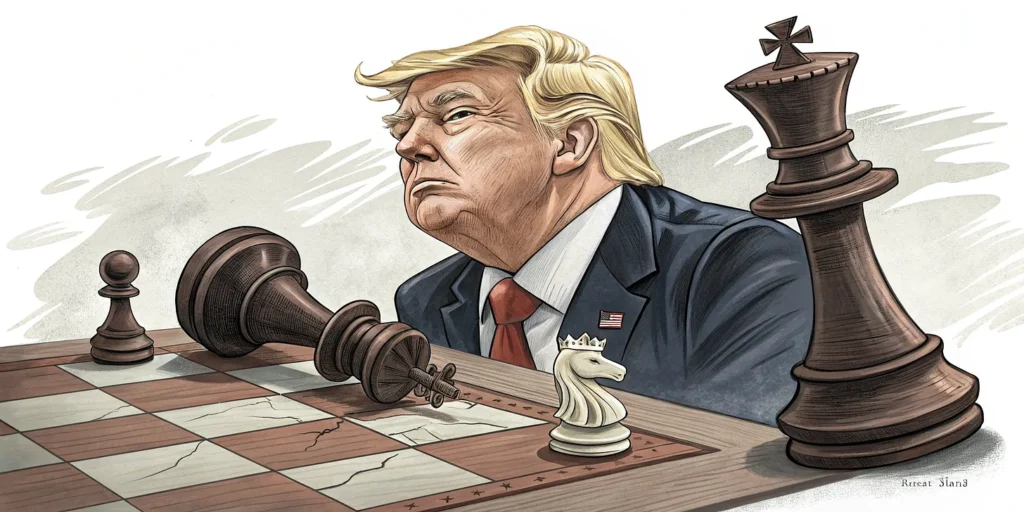
The Narcissistic Extinction Burst: Psychologists have documented a terrifying pattern in aging narcissists: as they confront their own mortality and irrelevance, they often experience what’s called a “narcissistic extinction burst”—a dramatic escalation of destructive behavior driven by the psychological need to prove they still matter, even if that means taking everyone down with them.
Now imagine that pattern in someone with access to nuclear weapons.
On January 8, 2026, President Donald Trump made a chilling declaration to The New York Times. When asked if there were any limits to his global powers, he responded: “Yeah, there is one thing. My own morality. My own mind. It’s the only thing that can stop me. I don’t need international law.” Says a man who has never been able to control his urges..
This statement should alarm every citizen of the world, not merely for its dismissal of international norms, but for what it reveals about Trump’s psychological state. We are witnessing a convergence of three catastrophic factors: a world leader with authoritarian ambitions, command over the world’s largest nuclear arsenal, and what mental health experts increasingly recognize as the characteristic behaviors of end-of-life narcissism—a psychological condition that compels aging narcissists toward scorched-earth destruction.
The question facing humanity is no longer theoretical: What happens when a malignant narcissist with nuclear weapons faces the one enemy he cannot defeat—his own mortality?
Understanding the Psychology: Why Narcissists “Take Everyone Down”
To understand the danger we face, we must first understand the psychology driving these behaviors. End-of-life narcissism is not simply “being difficult” in old age—it is a recognized pattern of destructive behavior documented by mental health professionals, hospice workers, and family therapists.
The Narcissistic Injury of Mortality
For individuals with Narcissistic Personality Disorder (NPD), death represents the ultimate “narcissistic injury”—an unavoidable proof that they are not special, not immortal, and fundamentally not in control. This triggers several specific psychological responses:
Pathological Envy of the Living: As they lose vitality, narcissists often experience intense envy of those who will survive them. The mindset becomes: “If I can’t play the game anymore, I’m flipping the board over so no one else can play either.”
The Extinction Burst: In behavioral psychology, an extinction burst occurs when a behavior suddenly intensifies just before it stops working entirely. As narcissists face their end, their manipulative and aggressive behaviors often spike in a final, desperate attempt to assert their existence and control.
The Loss of Control Response: Narcissism is fundamentally a defense mechanism built on control. Death is the ultimate loss of control, and to regain a sense of power, narcissists often try to control the emotions, finances, and futures of those around them—typically in destructive ways.
Malignant Narcissism: When Personality Disorder Meets Power
While we cannot offer a clinical diagnosis, many psychologists—including those associated with the “Duty to Warn” movement—have publicly analyzed Trump through the lens of malignant narcissism, a particularly dangerous category first identified by psychoanalyst Erich Fromm and further developed by Otto Kernberg.
Malignant narcissism combines four traits:
- Narcissism: Grandiosity and an insatiable need for admiration
- Paranoia: Persistent belief that others are conspiring against them
- Antisocial traits: Willingness to break rules without remorse
- Sadism: Taking pleasure in the suffering of perceived enemies
Dr. John Gartner, former professor at Johns Hopkins and co-founder of the “Duty to Warn” organization, along with 27 psychiatrists and mental health experts who contributed to The Dangerous Case of Donald Trump (2017), have warned that a malignant narcissist views the world as an extension of themselves. If they are going down—due to age, legal peril, or loss of status—they often feel the world should go down with them. They cannot conceive of a world existing successfully without them at its center.
The “Two Clocks” Crisis
Trump operates under what analysts call the “Two Clocks” dynamic:
The Biological Clock: At 79 years old, Trump faces the natural decline in cognitive sharpness and physical energy. For a narcissist, aging represents an unwinnable battle—one cannot negotiate with mortality. Each birthday, each stumble, each forgotten word becomes a severe narcissistic injury.
The Legal Clock: With multiple indictments and potential criminal convictions looming, Trump faces the prospect of legal consequences that could tarnish his legacy permanently.
When a narcissist realizes they cannot “win” against either mortality or time, their psychological goal often shifts. The objective moves from winning to spoiling the game itself. If they cannot be the winner, they ensure there is no winner at all.
This manifests in what psychologists call the “Samson Syndrome”—a reference to the biblical figure who pulled down the temple pillars, killing everyone including himself. For political figures with malignant narcissism, this typically appears in three forms:
Institutional Sabotage: Purging qualified experts and replacing them with loyalists, or dismantling regulatory bodies so the government cannot function without them.
Inciting Division: Creating an “Us vs. Them” environment so intense that reconciliation becomes impossible after they leave.
The “Poison Pill”: Making geopolitical or economic decisions that are difficult to reverse, effectively “booby-trapping” the future for whoever comes next.
The Present Crisis: Scorched Earth in Real Time
Trump’s recent actions align precisely with this extinction burst pattern.
The Military Aggression: Within his first weeks back in office, Trump authorized military strikes against Venezuela, captured its leader Nicolás Maduro, and threatened military action to annex Greenland from NATO ally Denmark. These aren’t the calculated moves of strategic foreign policy—they’re the desperate power plays of someone proving he still matters.
The Institutional Demolition: He has withdrawn the United States from 66 international organizations, gutted USAID (cutting over 80% of American medical and nutritional aid), and pulled out of the World Health Organization and Paris Climate Agreement. Experts project these cuts will lead to 14 million additional deaths globally by 2030, including 4.5 million children.
The Rejection of Constraints: Trump’s statement that he doesn’t “need international law” isn’t mere bravado. It’s the psychological marker of a narcissist who can no longer tolerate any force—even the rule of law—that suggests he is not omnipotent.
The Nuclear Question: When the “Extinction Burst” Has Global Consequences
Here is where the theoretical becomes terrifyingly practical. Most narcissists in their extinction burst phase can destroy families, businesses, or personal relationships. Trump has access to the nuclear codes.
Consider his recent pattern of behavior through the lens of end-of-life narcissistic psychology:
Escalating Aggression: The Venezuela strike, the threats against Greenland, the dismissal of international law—these aren’t strategic moves toward specific policy goals. They are demonstrations of power for power’s sake, the assertions of a man who needs to prove he can still shake the world.
Burning Institutional Bridges: The withdrawal from 66 international organizations isn’t about “America First” policy—it’s about ensuring the international order cannot function smoothly after he’s gone. If the institutions survived and thrived without him, it would prove he was never as essential as he believed.
Rejecting All Constraints: His statement that only his “own morality” can stop him reveals a complete rejection of external limits. For a narcissist facing mortality, accepting any external constraint (laws, norms, allies’ concerns) is psychologically equivalent to accepting death itself.
The terrifying reality is this: Trump is displaying all the classic markers of a narcissist in extinction burst mode, except he isn’t controlling a family business or personal fortune. He controls the world’s most powerful military and an arsenal capable of ending human civilization.
The Historical Parallel: When Strongmen Face the End
History provides cautionary examples of aging authoritarians facing their mortality. Joseph Stalin’s final years saw increasingly paranoid purges. Mao Zedong launched the Cultural Revolution partly as a desperate attempt to reassert relevance as his health failed.
What distinguishes Trump’s situation is the compressed timeline. The “two clocks”—biological and legal—are both running out simultaneously. This creates immense psychological pressure. A narcissist who feels they have decades left might be patient, strategic. One who sees the end approaching within years or even months has every incentive to act dramatically and quickly.
What Comes Next: The Path Forward
Understanding this psychological pattern isn’t about partisan politics—it’s about recognizing a genuine threat to global stability. The question is: what can be done?
Immediate Safeguards
Institutional Checks: Congress, the courts, and the military chain of command must recognize they are not dealing with normal political disagreement. They are potentially dealing with a leader experiencing a psychological crisis that makes him increasingly dangerous.
International Coordination: Allied nations must understand that Trump’s threats and actions may not be negotiable positions but rather symptoms of a psychological compulsion to prove power and control.
Public Awareness: Citizens must recognize the difference between political opposition and psychological crisis. This isn’t about policy disagreements—it’s about a fundamental inability to accept mortality or limits.
The Recovery Framework
History shows that systems can recover from narcissistic leadership, but it requires specific steps:
Immediate Stabilization: The first stage focuses on establishing boundaries against the chaos. This means direct communication between previously isolated parties (bypassing the narcissist’s triangulation), and isolating the most damaged parts of the system to prevent contamination.
Accountability: Recovery cannot begin until there’s accountability for those who enabled destructive behavior. This creates the foundation for rebuilding trust.
Long-term Reconstitution: Finally, recovery requires rebuilding culture—replacing loyalty-based systems with merit-based ones, processing the trauma openly, and restoring accurate institutional memory.
But here’s the crucial difference: Families and businesses can recover after a narcissist passes. The world cannot afford to wait for Trump to complete his extinction burst before beginning recovery. The potential cost is too high.
Conclusion: The Unthinkable Must Be Thought
We are in uncharted territory. Never before has a leader displaying the classic psychological patterns of end-of-life narcissistic destruction had access to nuclear weapons and command over a global superpower.
Trump’s statement that only his “own morality” can stop him isn’t a threat—it’s a confession. It reveals that he recognizes no external limits, accepts no constraints, and feels accountable to no law or institution. For a narcissist facing the ultimate loss of control—death itself—this psychological state makes him profoundly dangerous.
The pattern is clear. The timeline is compressed. The stakes are global. And the one person with the power to stop him has already told us he won’t (Donald Trump).
The question is no longer whether Trump is dangerous. The question is whether our institutions, our allies, and our citizens will recognize the danger before it’s too late.
What Can You Do?
This isn’t a time for paralysis. Here’s what matters:
Share this article. The greatest weapon against this pattern is public awareness. Talk to people who will listen.
Contact your representatives. Call your senators and congressional representatives. The message is simple: “I’m concerned about the President’s psychological fitness and the threat to global stability.” Thousands of calls cannot be ignored.
Stay informed and engaged. This pattern will likely escalate. Pay attention. Document what you’re witnessing. History is watching, and future generations will ask what we did when we saw the warning signs.
The recovery framework outlined above shows that systems can heal from narcissistic leadership—but not if we wait until after the extinction burst is complete.
Sources and Further Reading
Core Psychological Concepts
Malignant Narcissism: Fromm, E. (1964). The Heart of Man. Harper & Row. | Kernberg, O. F. (1984). Severe Personality Disorders: Psychotherapeutic Strategies. Yale University Press.
Narcissistic Injury: Kohut, H. (1971). The Analysis of the Self. International Universities Press.
Extinction Burst: Skinner, B.F. (1938). The Behavior of Organisms: An Experimental Analysis. Appleton-Century-Crofts.
Analysis of Trump
Lee, B. X. (Ed.). (2017). The Dangerous Case of Donald Trump: 27 Psychiatrists and Mental Health Experts Assess a President. Thomas Dunne Books.
Duty to Warn: Organization of mental health professionals concerned about Trump’s psychological fitness. Founded by Dr. John Gartner.
Current Reporting
Trump’s “Morality” Statement: The New York Times interview, January 8, 2026
Withdrawal from International Organizations: White House Executive Orders, January 2025 – Present
Impact Analysis: Projected deaths from USAID cuts and international withdrawal documented by global health researchers and published in multiple peer-reviewed journals.