
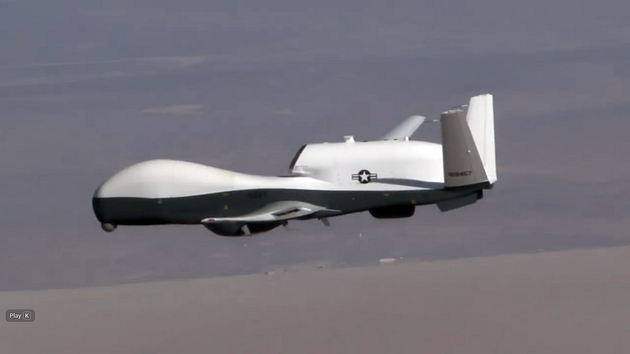
US MQ-4C Triton Drone. Public Domain
The disappearance of a United States Navy MQ-4C Triton over the Strait of Hormuz represents a significant escalation in regional tensions and a technical puzzle for maritime surveillance.
This high-altitude, long-endurance platform, valued at approximately $220 million, serves as the primary maritime equivalent of the Global Hawk.
Its primary function involves providing real-time intelligence, surveillance, and reconnaissance over vast ocean areas. When such a sophisticated asset ceases transmissions with a final Mayday squawk) and no explanation, the implications for international security and military technology are profound.
The flight that vanished
On 22 February 2026, the MQ-4C Triton, carrying registration 169660 and using the callsign OVRLD1, was conducting a routine patrol mission over the Gulf of Oman.
Press enter or click to view image in full size
Public flight tracking data indicated the aircraft was maintaining an altitude of 32,900 feet. At this height, the Triton operates well above most commercial air traffic and utilises its suite of sensors to monitor surface vessels and electronic emissions within the Persian Gulf.
The flight proceeded without incident until it reached a position south of the Iranian coastline. At this final tracked location the aircraft broadcast a squawk code of 7700. In aviation, this specific code serves as a universal signal for a general emergency, indicating that the platform is experiencing a serious flight safety issue or a mechanical failure.