
The document, which was re-posted after I reported the removal, shows Maxwell’s lawyers possess three FBI interviews with an underage Trump accuser that haven’t been released to the public.
Roger Sollenberger
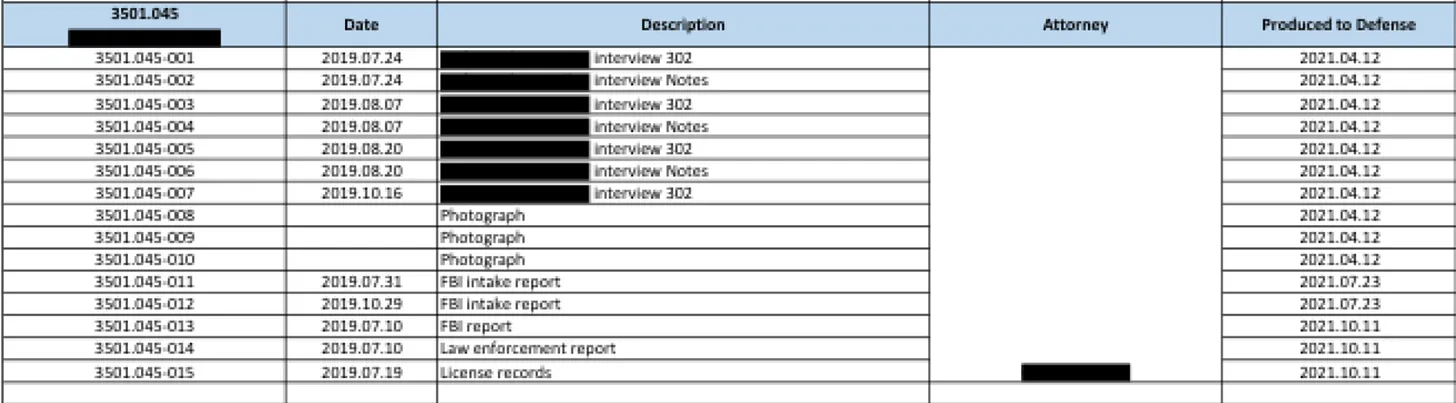
On Wednesday, I reported that the Justice Department had removed from its Epstein file database a key document about a woman who told the FBI that Donald Trump sexually assaulted her when she was a child. By Thursday evening, it was once again live.
It’s unclear why the DOJ deleted the document in the first place. ((Here’s proof the document had been taken down.) It’s also unclear why they put it back up after my reporting, which included a screenshot of the relevant information and a link to an internet archive of the full record. The information in the document pertaining to the Trump accuser — whom the DOJ identifies as a victim of Jeffrey Epstein in the early-mid 1980s — doesn’t appear altered in any way. (Compare the record on the DOJ site today with the version they removed.)
However, the existence of this record — more specifically, the public’s knowledge of its existence — carries significant implications when it comes to the president and his DOJ’s posture against Epstein co-conspirator Ghislaine Maxwell.
That’s because this document shows the FBI conducted not just one but four interviews with Trump’s accuser. And, as I reported Wednesday, while the government gave all four of those interviews to Maxwell’s legal team ahead of her trial, the government gave only one of those four interviews to us in the Epstein files.
In other words, this document shows that, in choosing to withhold three of the four interviews from the Epstein files, the DOJ has granted Maxwell potential blackmail on the sitting president of the United States. (That depends, of course, on what the victim said in those interviews, but it doesn’t look good for Trump. However, if the victim “exonerated” him, the public needs to know that as well, and you’d think he’d see common ground there.)
Maxwell has held this leverage over Trump since her team received the files in batches from DOJ prosecutors as a standard part of her trial prep in 2021, in April, July, and October, the record shows. (The victim was suing Epstein’s estate at the time, settling with a reported payout in December 2021.) But if DOJ had released those interviews with the Epstein files, as it appears the law absolutely requires, any leverage Maxwell had there would be gone. Instead, Trump’s DOJ — starring Pam Bondi, Todd Blanche, and Kash Patel — let her keep it.
What’s more, the American people still wouldn’t even know that Maxwell could potentially be blackmailing the president with these sworn victim statements if it weren’t for the existence of precisely this document — the document I caught DOJ removing from its public database.
Notably, you can ascertain the existence of the three missing FBI interviews without this document — that’s not why this document is special.
The record that disappeared — and is now back online — is an evidence catalog showing that those interviews were among the “non-witness material” that DOJ prosecutors produced for Maxwell’s defense team. In other words, this document is proof that Maxwell’s attorneys have those three interviews. It’s also proof that all four of those interviews — part of DOJ’s Maxwell trial evidence — should in fact have been released to the public in the Epstein files.
Why didn’t Trump’s DOJ release all of the victim’s FBI interviews? Why would the DOJ be fine with Maxwell’s attorneys holding these records while apparently denying them to the American public in defiance of the law? The DOJ should release those interviews to the public, an act that would, coincidentally, considerably weaken the hand that we now know Maxwell — perhaps uniquely — holds over the president.
Maxwell was convicted of sex trafficking children with Epstein in 2022, sat for a proffer session with Deputy Attorney General and former Trump criminal defense lawyer Todd Blanche in July (despite a previous proffer session via her lawyers before her trial), then got relocated without explanation to a minimum-security facility this summer.
Trump has said multiple times in recent months that he would consider clemency for Maxwell. Earlier this month, she took the fifth in closed-door congressional testimony, though she used the opportunity to inveigle Trump for a pardon.
Maxwell’s lead counsel, David Oscar Markus, said in a statement to the House Oversight Committee at the time that his client “is prepared to speak fully and honestly if granted clemency by President Trump.”
The statement also said that Trump and former President Bill Clinton “are innocent of any wrongdoing.” However, Markus said, “Ms. Maxwell alone can explain why, and the public is entitled to that explanation.”
____
https://sollenbergerrc.substack.com/p/doj-deleted-record-revealing-that