
militarywatchmagazine.com
he Iranian Islamic Revolutionary Guard Corps reported on 10 June that long-range ballistic missiles struck Muwaffaq Salti Air Base in eastern Jordan, targeting hardened shelters housing U.S. Air Force F-35 fifth generation fighters. According to these reports, the attack formed part of a broader retaliatory missile barrage against U.S. military facilities in Jordan, Bahrain and Kuwait, responding to U.S. strikes on Iranian military infrastructure. It remains unknown whether any F-35s were destroyed or damaged. The Corps reported that the strike employed Kheibar Shekan ballistic missiles against hardened aircraft shelters, describing the operation as a demonstration that even high-value stealth aircraft parked at regional bases remain vulnerable to precision missile attack. At present, the available evidence confirms the missile attack but not the claimed destruction of F-35 aircraft, as independent analysts have struggled to conduct battle damage assessments.
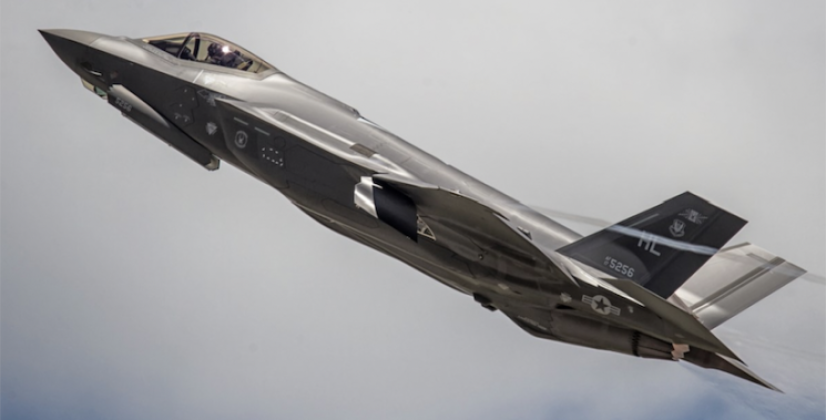
U.S. Air Force F-35A Fighter
Muwaffaq Salti Air Base has evolved into one of Washington’s principal expeditionary air hubs, previously supporting offensives against and an occupation of Syria, and more recently playing an important role in attacks on Iran. The base has hosted U.S. Air Force F-15E and F-16 fighters, as well as MQ-9 unmanned aircraft, aerial refuelling aircraft, and rotational detachments of F-35s. It also serves as a logistics node for coalition operations, and benefits from significant American investment in hardened infrastructure, ammunition storage and command-and-control facilities. The deployment of F-35s to Jordan reduces flight times to theatres across the Levant and Persian Gulf, while complicating adversary targeting by dispersing aircraft away from larger bases. U.S. Air Force bases across the Middle East, including major facilities in Qatar, the United Arab Emirates, Kuwait and Saudi Arabia have all been targeted extensively by Iranian missile strikes since the U.S. and Israel launched an assault on the country on February 28.
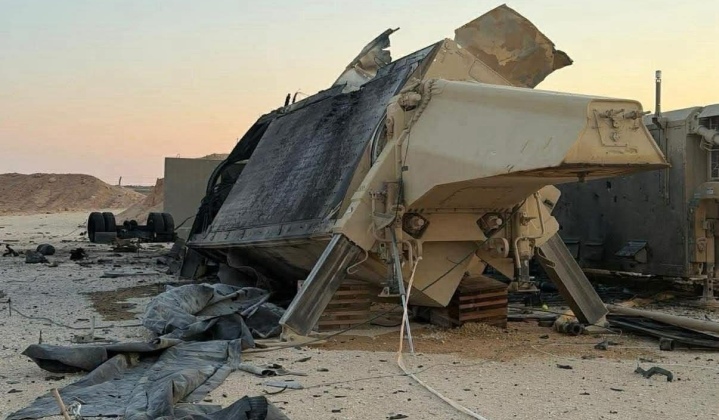
U.S. Army AN/TPY-2 Radar From THAAD System in Jordan Destroyed in Engagements with Iranian Forces
The Kheibar Shekan is among Iran’s most modern ballistic missile types, and is reported to have a range of approximately 1,700 kilometres, placing all U.S. bases in Iraq, Jordan and the Gulf within reach from Iran. The missile uses a manoeuvrable re-entry vehicle and advanced guidance package intended to improve terminal accuracy while complicating interception by missile defence systems. A notable characteristic of the Kheibar Shekan is its relatively lightweight composite construction and solid-propellant motor, which permit high mobility on transporter-erector-launchers. Iranian officials claim that the missile’s manoeuvring capability reduces interception probability by systems such as THAAD or Arrow. U.S. and allied missile defences in the Middle East have already been seriously depleted, with the Iranian Islamic Revolutionary Guard Corps having quickly achieved the destruction of $2.7 billion worth of high value radar systems, including the AN/FPS-132 radar in Qatar, and two AN/TPY-2 radars in Jordan and the United Arab Emirates. This has left U.S. and Israeli defences heavily reliant on ship-based radars and on the AN/TPY-2 radar station in Turkey.
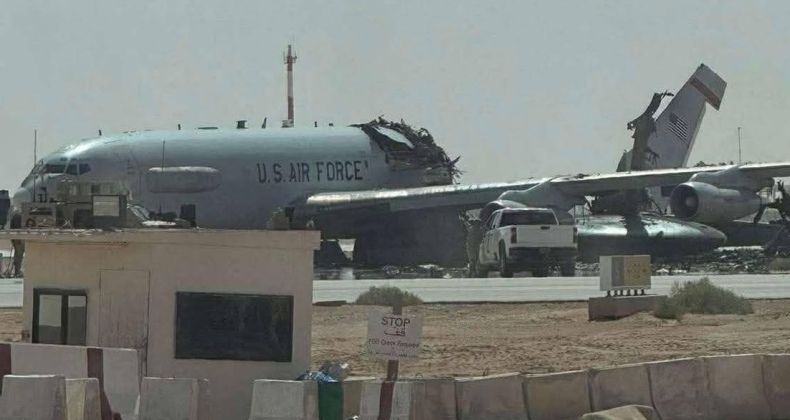
Destroyed E-3 AWACS at Prince Sultan Air Base
The Israeli paper Haaretz in late March confirmed that 8 out of 10 Iranian missiles launched against Israeli targets were reaching their targets, following mounting reports and growing quantities of footage pointing to the failures of Israeli and U.S. ballistic missile defences. The report further noted that success rates have continued to improve as air defences have become increasingly strained, with the destruction of U.S. forward radar systems in allied Arab states such as Qatar and the United Arab Emirates having played a central role in this. Footage has confirmed that the Revolutionary Guard Corps has launched multiple successful strikes against high value U.S. and allied aircraft at facilities across the Middle East, including E-3 AWACS and KC-135 tanker aircraft vital to supporting offensives against Iran. Footage released on March 19 also confirmed a strike on an F-35A fighter by Iranian air defences, with the demonstration of this capability complicating planned air offensives. Despite this isolated success, however, F-35s are still considered highly challenging to target when airborne, increasing the incentives to target them intensively when they are on the ground.
____
https://militarywatchmagazine.com/article/iran-hardened-us-f35-hangars-jordan