
Silviu “Silview” Costinescu
This just happened:
This guy explains why we should be thankful that Iran showed responsible restrain and didn’t hit the nuke silos directly, choosing to just send a strong warning instead:
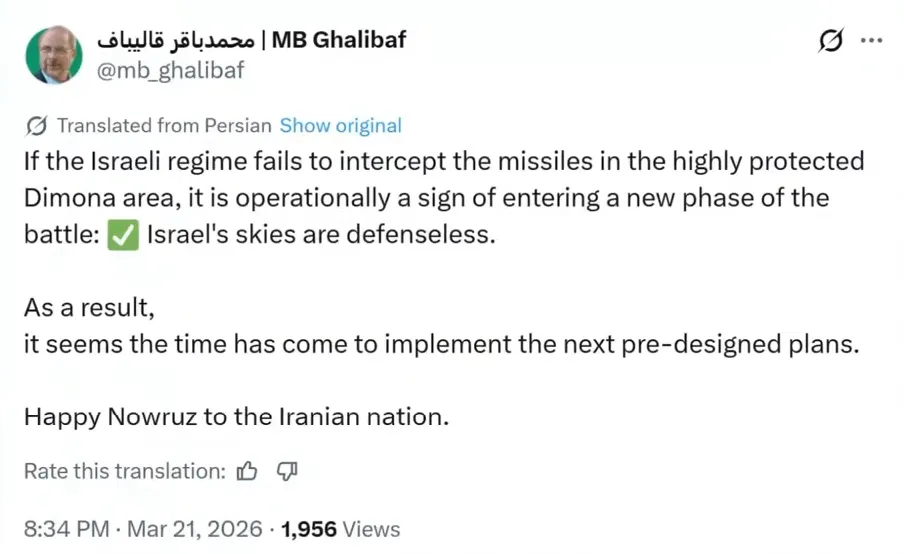
Where JFK enters the picture:
Are you one of the people who had JFK flashbacks in the back of the head the minute they saw the first report on Charlie Kirk’s assassination? Those weren’t baseless at all, there are multiple parallels to be drawn and Dimona is central.
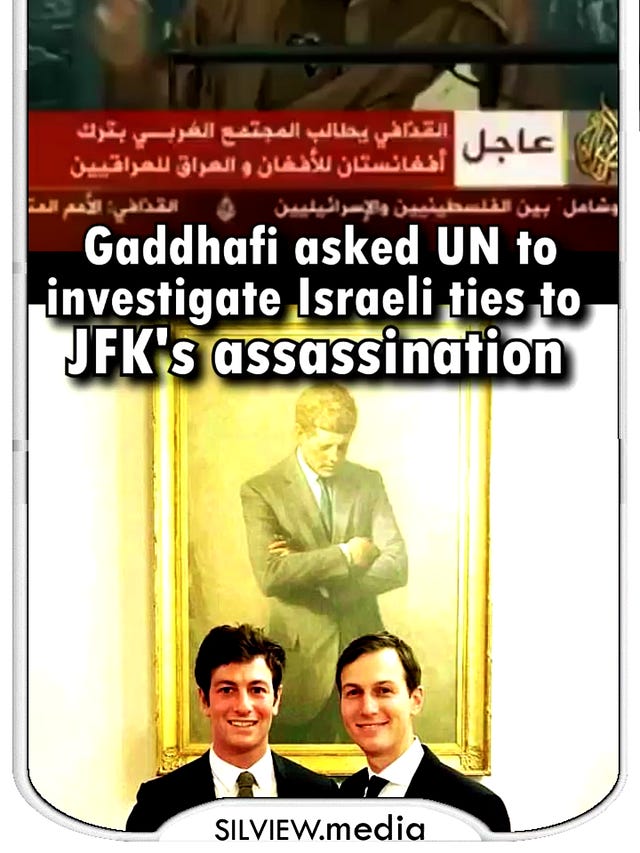
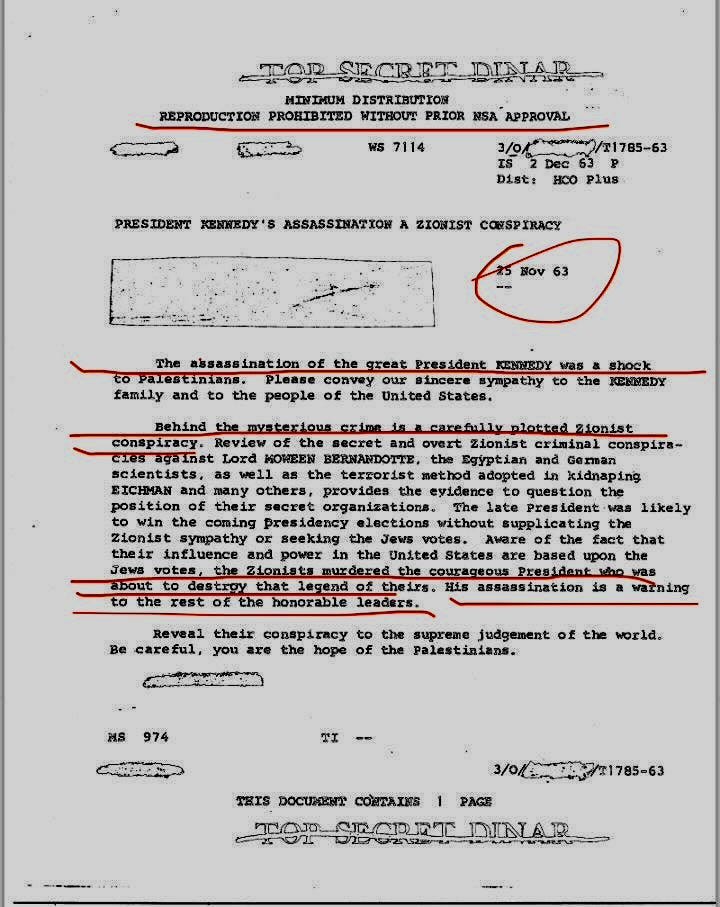
Even more motives that point same way:
A Forgotten Speech: When John F. Kennedy Acknowledged Palestinian Refugee Rights
Great Reporter / March 19, 2026
In the summer of 1957, a young senator from Massachusetts delivered a speech that few Americans remember today but that reverberated quietly through diplomatic circles in Washington and Tel Aviv. The senator was John F. Kennedy. The subject of his speech was not Israel or Palestine, but colonialism and the struggle for independence in the developing world. Yet buried within the address was a statement about Palestinian refugees that would alarm Israeli leaders and provoke sharp criticism from influential Zionist figures in the United States.
Kennedy was forty years old at the time. He had served five years in the Senate and was already widely viewed as a rising star in American politics. Within three years he would become the 35th president of the United States. But in July 1957, he was still free enough politically to voice a position that almost no major American political figure would publicly repeat for decades.
During a Senate speech titled “Imperialism – The Enemy of Freedom,” Kennedy declared that the United States should recognize the “legitimate claims” of Palestinian refugees to either return to their homes or receive compensation for their lost property. In doing so, he invoked a principle embedded in United Nations Resolution 194 — a principle that Israel had long rejected and that Washington had never seriously enforced.
The reaction was swift and hostile. Israeli officials were stunned. Prominent American Zionist leaders accused Kennedy of undermining Israel’s existence. Letters poured into his office demanding that he retract or clarify his remarks.
Kennedy refused to withdraw them.
The episode, largely forgotten in modern political discourse, reveals a moment when a future American president publicly acknowledged Palestinian refugee rights — and how that statement shaped Israeli perceptions of him throughout his presidency.
The Crisis Kennedy Was Addressing
The Palestinian refugee crisis began during the war surrounding the creation of the state of Israel in 1948. When Israel declared independence on May 14 that year, war erupted between the new state and neighboring Arab countries.
During the conflict, approximately 700,000 Palestinian Arabs fled or were expelled from their homes. The causes remain contested. Israeli accounts historically argued that most Palestinians left voluntarily, expecting to return after Arab armies defeated Israel. Palestinian and Arab narratives maintain that many were forced out by Israeli military operations, intimidation, and massacres such as the attack on the village of Deir Yassin.
What is undisputed is that by the end of the war hundreds of thousands of Palestinians were living in refugee camps across the region. Many settled in Gaza and the West Bank, while others were dispersed across Jordan, Lebanon, and Syria.
Israel refused to allow them to return, arguing that their return would threaten the Jewish majority necessary for the state’s identity and security. Arab governments, for their part, often refused to permanently integrate the refugees, insisting that their displacement was temporary and that justice required their return to Palestine.
To address the humanitarian crisis, the United Nations created the United Nations Relief and Works Agency (UNRWA) in 1949 to provide food, shelter, and education to the refugees.
But the underlying political issue remained unresolved.
Resolution 194 and the Principle of Return
In December 1948, the UN General Assembly passed United Nations General Assembly Resolution 194. The resolution stated that refugees wishing to return to their homes and live peacefully with their neighbors should be permitted to do so “at the earliest practicable date.” It also declared that compensation should be paid for the property of those choosing not to return.
For Palestinians and many international legal scholars, Resolution 194 established the foundation of what became known as the “right of return.”
Israel rejected implementing the resolution. Israeli leaders argued that absorbing hundreds of thousands of Palestinian Arabs would fundamentally alter the demographic character of the new state.
By the mid-1950s, the refugee crisis had become one of the central unresolved issues of the Arab-Israeli conflict. Nearly a decade after the war, refugee camps remained overcrowded and impoverished. A generation of Palestinians was growing up stateless.
This was the crisis Kennedy referenced in his 1957 speech.
A Speech on Colonialism
Kennedy’s Senate address was primarily about the Algerian independence struggle against France. The Algerian war had become one of the defining anti-colonial conflicts of the era, and Kennedy argued that the United States should support national liberation movements rather than European colonial powers.
But in the middle of the speech, Kennedy expanded his argument to the broader Middle East.
“What have we done to the Middle East?” he asked. “Instead of recognizing the legitimate claims of the Arab refugees to repatriation or compensation for their lost lands and property — which we voted for in the United Nations in 1948 — we have allowed their just demands to become subordinated to other strategic considerations.”
It was a striking statement.
Kennedy was not merely acknowledging the existence of Palestinian refugees; he was affirming that their claims were legitimate and that the United States had failed to uphold the principle it had endorsed at the United Nations.
He also warned that ignoring the refugee crisis had geopolitical consequences.
“The Arab world has been increasingly driven to extremism because of this,” Kennedy argued. “The Middle East will remain unstable as long as this problem is unsolved.”
His point was pragmatic as much as moral: unresolved injustice, he believed, was fueling radicalism and instability in the region.
Backlash from Zionist Leaders
Although the speech initially received little attention in the broader American press, the Middle East portion did not go unnoticed.
Prominent Zionist organizations quickly protested Kennedy’s remarks.
Among the most forceful critics was Abba Hillel Silver, a leading American Zionist rabbi who had played a major role in lobbying for the creation of Israel.
Silver wrote to Kennedy warning that endorsing refugee repatriation was dangerous and irresponsible. Allowing hundreds of thousands of Palestinian Arabs to return, he argued, would effectively end Israel as a Jewish state.
Kennedy responded in a carefully worded letter dated July 23, 1957.
He did not apologize.
Instead, he clarified his position.
“I did not call for repatriation of all Arab refugees,” Kennedy wrote. “I called for recognition of their right to repatriation or compensation as stated in the United Nations resolution. This is not the same thing.”
Kennedy acknowledged Israel’s concerns but insisted that Palestinian grievances could not simply be ignored.
“I recognize that Israel cannot accept the return of all refugees without endangering its security and its Jewish character,” he wrote. “But I also believe that the refugees have legitimate claims that cannot be ignored forever.”
The response did little to calm his critics.
Political Pressure
American Jewish organizations continued pressing Kennedy throughout the late 1950s. Some warned that his remarks could cost him political support if he pursued a presidential campaign.
Kennedy listened carefully. He met with Jewish leaders and reassured them of his support for Israel’s security and right to exist.
But he did not publicly retract his statement.
Privately, according to accounts from aides and advisers, Kennedy maintained that the refugee problem was real and would eventually need to be addressed.
Publicly, however, he largely stopped discussing it.
The Presidency and the Johnson Plan
When Kennedy became president in 1961, the refugee crisis remained unresolved. His administration did not attempt to force Israel to accept large-scale repatriation.
But Kennedy did authorize a diplomatic effort to explore possible solutions.
He appointed diplomat Joseph E. Johnson as a special envoy to investigate whether progress could be made.
Johnson’s proposal, developed in 1962, suggested allowing Palestinian refugees to choose among several options: returning to Israel, resettling in Arab countries, or emigrating elsewhere. Refugees who did not return would receive compensation.
Israel would retain the ability to screen returnees for security reasons.
The plan attempted to reconcile refugee rights with Israeli concerns.
Neither side accepted it.
Israel rejected the proposal because it implicitly acknowledged a right of return. Arab governments rejected it because it did not guarantee that all refugees wishing to return would be allowed to do so.
Kennedy quietly allowed the initiative to fade.
A Unique Statement in American Politics
Despite the controversy it provoked, Kennedy never withdrew the core statement from his 1957 speech.
He had said that Palestinian refugees possessed “legitimate claims” to repatriation or compensation and that the United States had supported this principle at the United Nations.
In the decades that followed, no American president or major presidential candidate would make a similarly explicit endorsement of those rights.
After Kennedy’s assassination in 1963, the refugee issue largely disappeared from mainstream American political rhetoric, even as it remained central to the Israeli-Palestinian conflict.
Today, Kennedy’s Senate speech stands as a rare historical moment: a future U.S. president publicly acknowledging the legal and moral claims of Palestinian refugees while simultaneously affirming Israel’s right to security.
Whether Kennedy might have attempted a more ambitious solution in a second presidential term remains an open question.
What is certain is that in 1957, long before the presidency and long before the rigid political boundaries of later decades, John F. Kennedy stood on the Senate floor and said something few American leaders have repeated since.
The Palestinian refugees, he said, had legitimate claims — and ignoring them would only deepen the conflict.
And more of the same:
So maybe in a justice court these are not sufficient to get a definitive guilty sentence, but if you had to bet a large sum of money, there should be no hesitation, all in!
____
https://silviewmedia.substack.com/p/iran-has-just-avenged-jfk?